


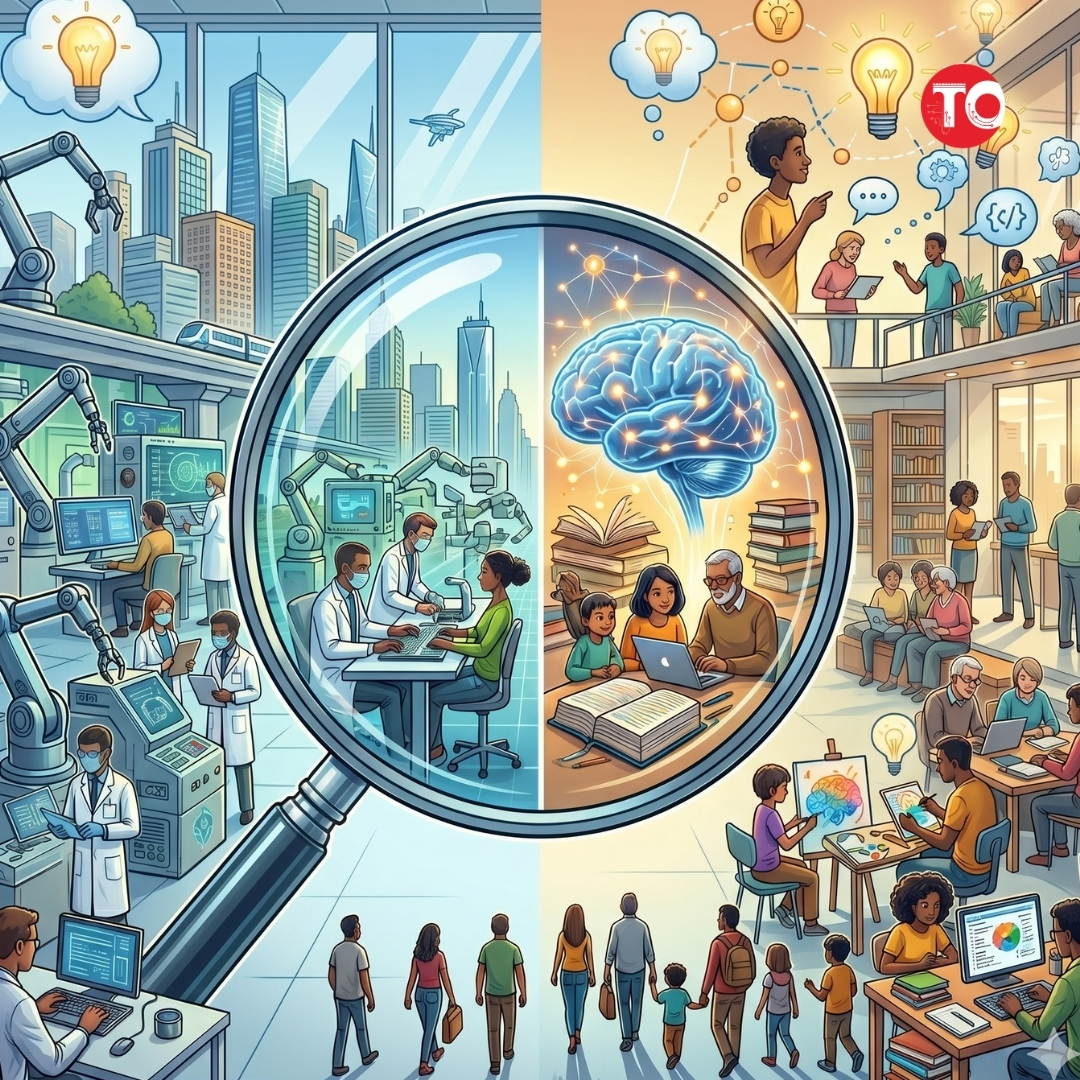
The idea of cognitive and skills divide is an illustration of a growing concern in the contemporary
societies where the scalding technological advancements and economic transformation has
redefined the need that is required of the individuals. This gap is indicated through a human prism
to not just a difference in technical skills, but also a difference in cognitive skills such as critical
thinking, adaptability, and problem-solving. With the growing dependence of economies on
knowledge and innovation, the disparity between those who are prepared to deal with such
demands and those who are not is becoming wider. The most notable area of this gap is the
interdependent world of education and the labor market, where preparation is the ultimate key to
opportunities and socio-economic mobility in the long run.
Education is the main source of building the cognitive and practical skills. The quality, access, and
relevance of education, however, differ greatly in various contexts. The access to modern and wellequipped educational settings will help people acquire a higher level of analytical skills, digital
literacy, and skills to take part in the ongoing learning. These skills equip them to react in an
efficient manner to the changing needs of the workforce. Conversely, people who are exposed to
poor or old education systems usually have no exposure to such skills and the effect is a kind of
under-preparedness that continues to exist over the years. This gap is initiated at an early age and
is further covered as one advance to the various levels of learning and ultimately determines his or
her ability to compete in the complicated work settings.
This gap is also enhanced by the workforce, whereby the nature of work is constantly taking on a
different shape. The recent technological changes (automation, artificial intelligence, and digital
platforms) have moved the demand to higher-order skills, such as innovation, collaboration, and
strategic thinking. The so-called prepared people are not only those who have technical knowledge
but also the cognitive ability to meet new roles and environments. They can upskill, reskill, and
navigate uncertainty with more confidence. Conversely, the unskilled tend to encounter a lot of
obstacles in either joining or maintaining jobs because their competencies are not in tandem with
the prevailing market needs. Such a discrepancy between the skills that are available, and the
competencies that are needed, results in structural inequalities in the labor market, restricting
upward mobility of a large share of the population.
It is not just a personal issue but a societal-economic and structural issue to which the gap between
the prepared and the unprepared is a subset. Resource availability including technology,
mentoring, and learning is also a significant determinant of preparedness. With a more privileged
background, the person will have higher chances of being exposed to a place that will help him
develop intellectually and acquire skills, unlike those in a disadvantaged background who may not
be able to do so. It is a cycle in which inequality is reproduced since the unprepared are less able
to improve their conditions due to their lesser ability to seek education and training.
Another factor that is contributing to this gap is the digital divide, which has grown to be more
pertinent in both education and work. With the use of digital tools and platforms becoming a
critical part of learning/working, those who do not have access to effective technology or digital
training are at a significant disadvantage. This does not only impact their capacity to learn new
things but also limits their involvement in the contemporary labor force. As a result, the gap
between the prepared and the unprepared is strengthened, and the digital exclusion becomes a
factor that divides the education levels and the access to the job market.
The cognitive and skills gap should be bridged by a cognitive transition to more inclusive and
adaptive frameworks that are more focused on lifelong learning and equal access to resources.
Schools should change the paradigm and implement the approaches that would emphasize critical
thinking, creativity, and digital skills. At the same time, the organizations and policymakers must
invest in training initiatives that can enable them to retain the skills especially where the most
susceptible members are concerned. This gap is to be closed to ensure that the workplace is more
friendly and to ensure that individuals are not shut out due to the systemic barriers. Lastly,
cognitive and skills gap is a matter of concern that is of great concern to both the education systems
and in the labor markets. Without certain steps to reduce the gaps in access and preparedness, the
divide between the prepared and the unprepared will continue expanding, which will harm the
potential of individuals and societal development in general.