


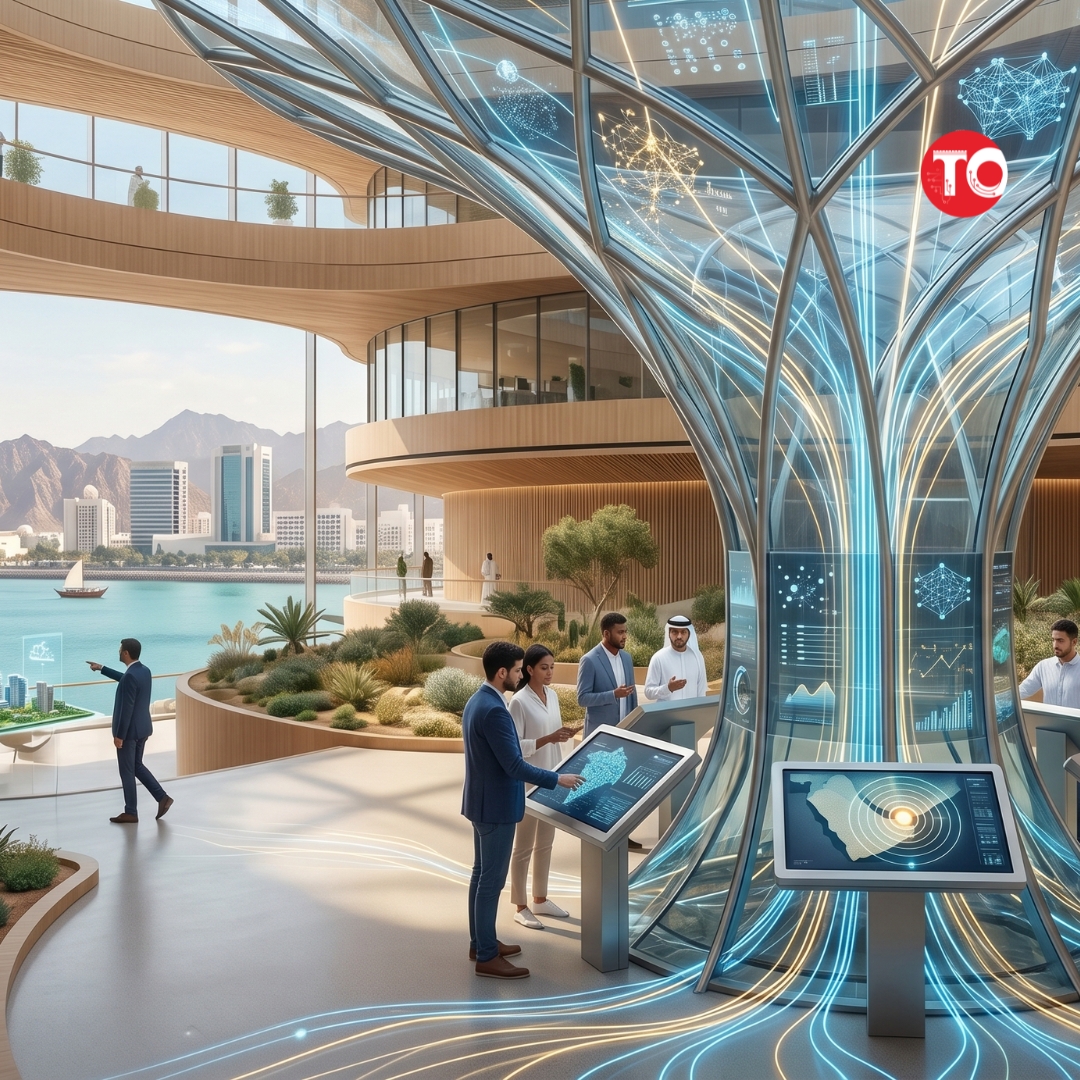
Unlike other countries, we in Oman do not really make noise but rather action by making moves. Yes, through Royal Decree No. 50/2026, issued by Sultan Haitham bin Tarik, Oman has formally established a dedicated zone focused entirely on artificial intelligence and advanced technologies. What does this mean? We are indeed making moves with artificial intelligence. The launch of the AI Special Zone in Muscat is one of those decisions that may not look dramatic today, but has the potential to reshape the country’s economic future over the next decade. This is not just another free zone designed to attract general business. It is highly targeted, built around a single idea: if AI is the future, then Oman wants a controlled environment where that future can be built locally (insha’Allah).
What makes this initiative interesting is how intentional it is. The zone will operate under the Special Economic Zones framework, meaning companies will benefit from incentives, exemptions, and a more flexible regulatory setup. But beyond incentives, the real value lies in the ecosystem being designed. One that allows startups, global tech companies, and researchers to build, test, and scale solutions faster than they typically would.
According to recent updates, the zone will be located in Seeb and span around 104,000 square metres, positioning it close to key infrastructure and making it accessible for both local and international players. It is expected to host industries that go beyond just software. Industries include but is not limited to semiconductors, robotics, and integrated AI systems. The aim is to see the zone connecting multiple sectors into one innovation-driven environment.
The AI zone is aligned with the country’s broader economic direction under Vision 2040 and the Eleventh Five-Year Development Plan (2026–2030), both of which emphasize diversification, digital transformation, and the shift toward a knowledge-based economy. Accelerating the digital economy while reducing reliance on traditional sectors is the ultimate goal.
The AI zone is designed to act as a platform, not just a location. It will serve as a hub for startups from Oman and abroad, giving them a structured environment to grow and expand into regional and global markets. At the same time, it is expected to attract foreign investment, something that has already been highlighted as a key driver behind the initiative. The digital economy contributed only around 2% of GDP in 2021, and the national target is to push that to 10% by 2040.
Startups would have bigger advantage where they will have an environment that removes friction i.e. getting faster licensing, easier access to investors, and a support system that understands tech businesses. For global companies, Oman will be offering something different from our neighbors, for example, a less crowded entry point into the region, combined with strong government backing. And for local talent, this could be one of the most important shifts in recent years, opening doors to specialized careers in AI, robotics, and data science.
Artificial intelligence is not a standalone industry yet an enabler. It enhances logistics, improves healthcare systems, optimizes tourism experiences, and drives smarter manufacturing. By investing in AI infrastructure now, Oman is effectively investing in multiple sectors at once. It is building a multiplier effect, not just a single stream of growth.
This is indeed not just a smart move but also a competitive one. The region is already active in AI, with major investments coming from neighboring countries. Oman is entering the space slightly later, but that might actually work in our favor. It has the advantage of learning from others, avoiding unnecessary complexity, and building a more focused and efficient ecosystem.
The real opportunity lies in timing. Ecosystems like this reward those who move early. The companies, entrepreneurs, and investors who step in during the early stages are usually the ones who shape the ecosystem, and obviously benefit the most from it later.
Looking ahead, the expectations are clear: more AI startups, stronger international partnerships, increased investment flows, and a workforce that evolves alongside technology. We has made the move. We has set the foundation. We defined the direction, and we are creating the opportunities. Now is about who will step in early enough to be part of what comes next. Until we catch up next week, let us think together on how we can be part of our own AI Zone success.