



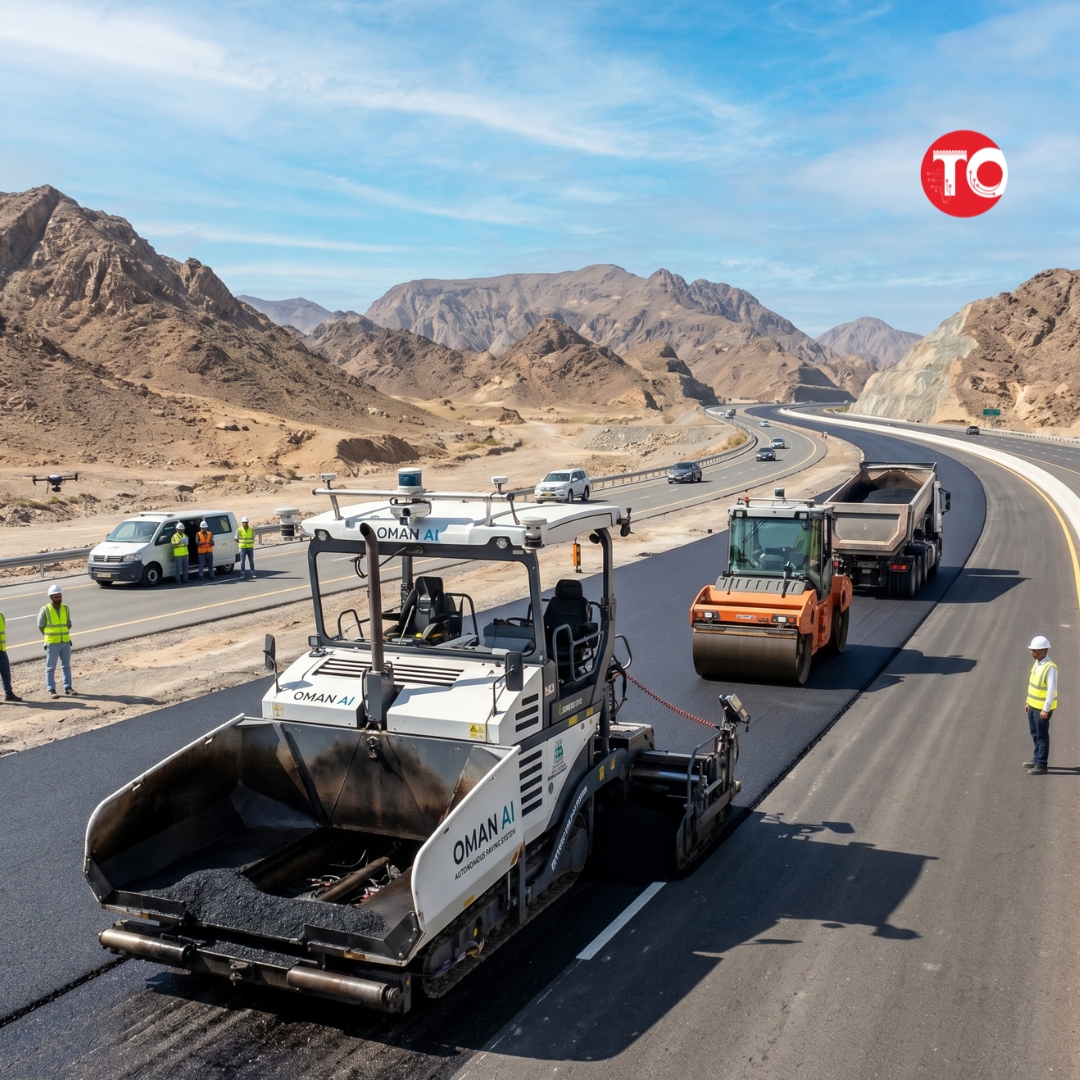
The Sultanate of Oman has achieved a major technological milestone by officially integrating autonomous artificial intelligence into its national road construction framework. This innovative system made its debut during Stage 4 of the Sultan Said bin Taimur Road dualization project, located in the Wilayat of Muqshin within the Dhofar Governorate. The deployment represents a major step forward in how the country plans to build and modernize its physical infrastructure.
The project was executed in close collaboration with Galfar Engineering, a leading construction firm in the region. By utilizing AI-guided machinery and smart automation tools, the initiative has successfully demonstrated how advanced technology can elevate construction quality, speed up project timelines, and drastically improve worker safety on high-risk sites. The software continuously monitors paving precision, ensuring a level of accuracy that traditional manual methods can rarely replicate.
This development is highly significant as it marks the first application of AI-powered asphalt paving in Oman's history. The autonomous machinery uses a network of sensors and real-time data processing to lay down material smoothly, automatically adjusting to terrain variations and temperature fluctuations. This level of technical oversight minimizes material waste, reduces future maintenance costs, and ensures that the road surface meets strict international engineering standards.
The successful rollout in the Dhofar Governorate sets a new benchmark for local infrastructure construction standards across the country. It proves that heavy industry can be successfully automated, paving the way for future smart-city projects and high-tech transit networks. By shifting from traditional labor-intensive practices to tech-driven solutions, Oman is actively positioning its domestic construction sector as one of the most advanced in the region.
Ultimately, this AI integration aligns with Oman Vision 2040’s goal of building sustainable, modern infrastructure through digital transformation. The lessons learned from the Muqshin project are expected to guide future highway developments across other governorates. As the country continues to invest heavily in its transport networks, autonomous technology will likely become a standard tool for building safer, more durable roads.