




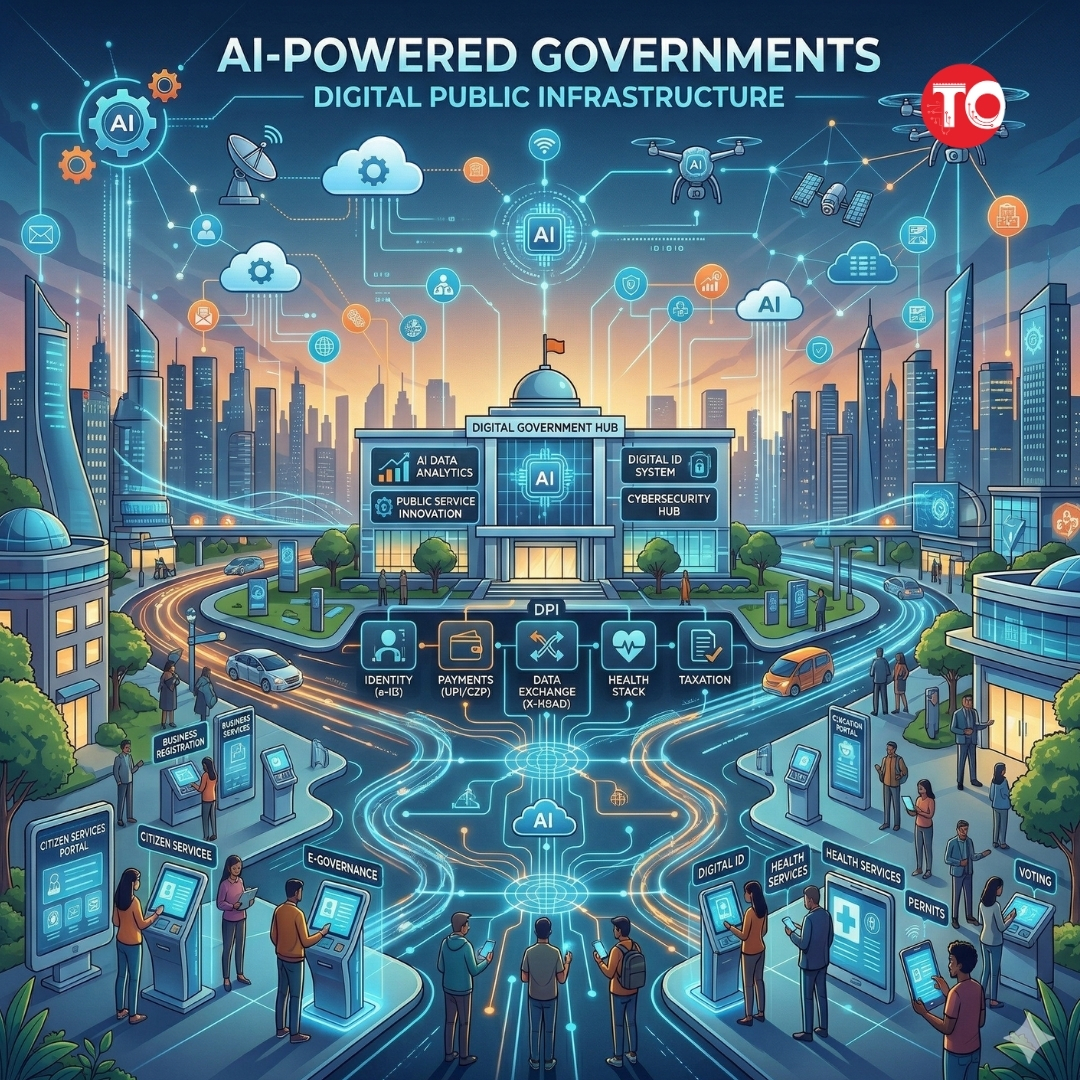
Governments around the world are changing the way they function by using Artificial Intelligence (AI) and digital systems. In the past, public services often involved long queues, paperwork, and delays. Today, with the help of technology, many of these processes are becoming faster, simpler, and more efficient. This transformation is supported by what is called digital public infrastructure (DPI), which acts as a foundation of digital tools and platforms that help governments deliver services to citizens more effectively.
Artificial Intelligence is playing a key role in improving how governments make decisions. AI can analyze large amounts of data in a very short time, helping officials understand patterns and make informed choices. For example, AI can predict traffic congestion, monitor environmental changes, or even help detect diseases early in healthcare systems. It is also used in chatbots that answer citizen queries instantly, making communication easier and more accessible. By reducing human error and automating routine tasks, AI allows governments to focus on more complex and important issues.
India has emerged as a global leader in building digital public infrastructure at a large scale. Systems like Aadhaar, which provides a unique digital identity, and UPI, which enables instant digital payments, have transformed everyday life for millions of people. Platforms like DigiLocker allow citizens to store important documents digitally, while systems such as CoWIN played a crucial role during the COVID-19 vaccination drive. These tools are designed to work together, creating a seamless digital ecosystem that is affordable, inclusive, and accessible even in rural areas.
E-governance, or electronic governance, is another important aspect of this transformation. It refers to delivering government services online instead of through physical offices. Today, people can apply for passports, pay taxes, access healthcare records, and file complaints from the comfort of their homes. This not only saves time but also increases transparency, as citizens can track the progress of their applications. The convenience and speed of these services have significantly improved the overall experience of interacting with government systems.
Despite these advancements, there are challenges that need attention. Not everyone has access to the internet or the skills needed to use digital platforms, which creates a digital divide. There are also concerns about data privacy and cybersecurity, as large amounts of personal information are stored online. Additionally, AI systems must be carefully designed to avoid bias and ensure fair decision-making. Governments must address these issues through strong policies, awareness programs, and secure technological frameworks.
Looking ahead, the future of AI-powered governments is promising. Public services are expected to become even more personalized, efficient, and responsive. Governments may use real-time data to design better policies and engage more actively with citizens through digital platforms. The ultimate goal is to create a system where technology supports governance in a way that is inclusive, transparent, and beneficial for all.
In conclusion, AI and digital public infrastructure are transforming governance in meaningful ways. They are making services faster, improving decision-making, and bringing governments closer to citizens. However, for this transformation to be truly successful, it must be built on trust, fairness, and inclusivity. When used responsibly, technology has the power to create better governance and improve the quality of life for everyone.