




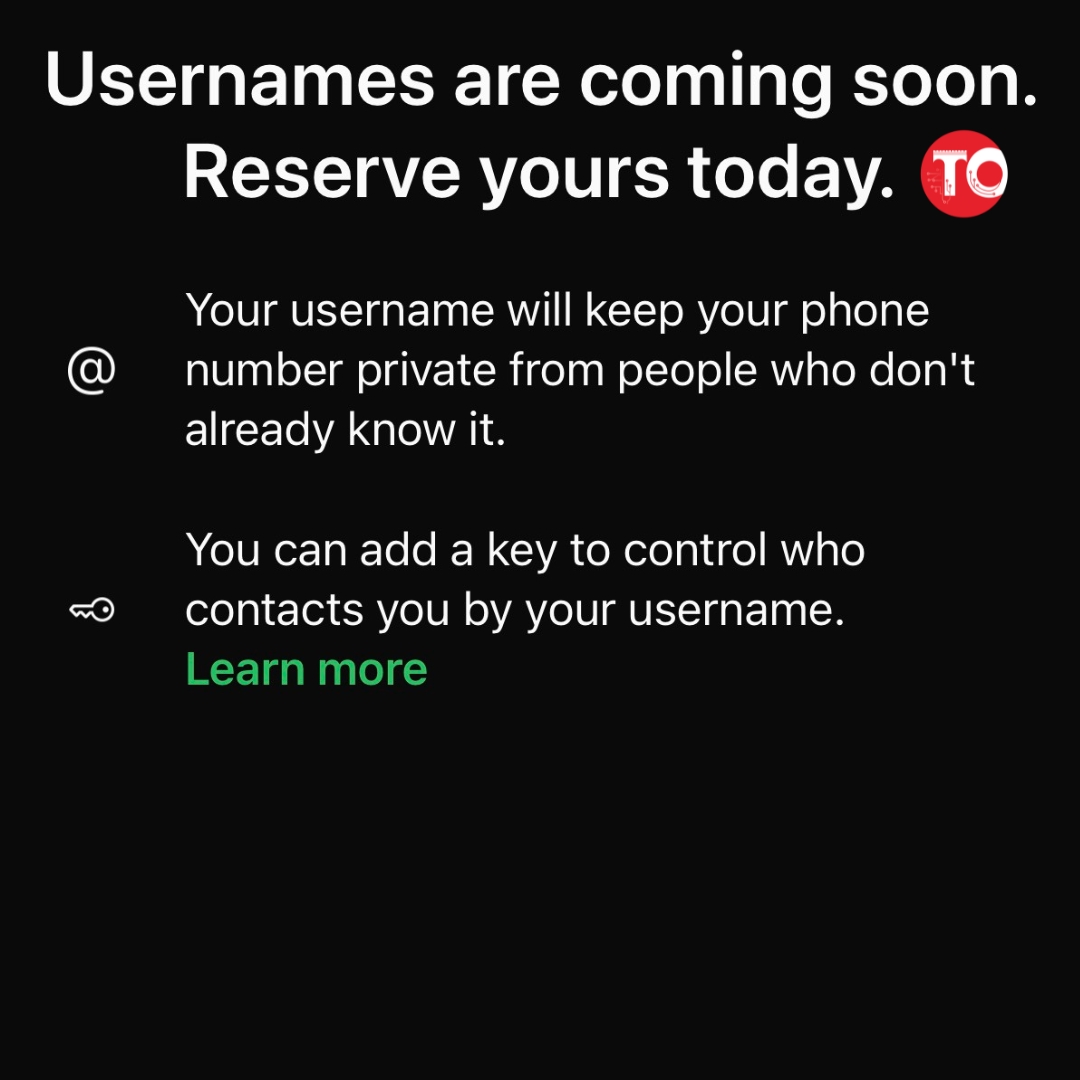
In one of the most substantial privacy updates since its inception, WhatsApp has officially announced the rollout of a username reservation system, allowing its global user base of over three billion people to chat without ever disclosing their personal phone numbers. The Meta-owned messaging giant confirmed that users can now lock in an optional, unique username ahead of a full, enterprise-wide deployment scheduled for later this year. The transition represents a massive architectural pivot for the platform, which has strictly relied on raw mobile digits as a user's primary identity for over a decade.
The introduction of usernames aims to erase a long-standing communication barrier, providing a highly secure buffer for casual, everyday interactions. In an official corporate blog post outlining the update, WhatsApp emphasized that exchanging phone numbers can often feel like too major a privacy compromise when dealing with new acquaintances, colleagues, or local vendors. Because a mobile number is tied to personal bank accounts, social media profiles, and government registries, giving it away opens users up to potential tracking or unwanted intrusion. The new system remedies this vulnerability, enabling users to establish an instantaneous, secure chat link while keeping their real-world credentials completely hidden.
To protect the platform from chaotic handle-squatting, WhatsApp is rolling out the reservation feature via a phased, systematic deployment schedule. Initially, verified business accounts, premium enterprise partners, and long-standing channel administrators will receive priority access to claim their corporate handles and protect their brand identities. Once this foundational tier is secure, the feature will expand rapidly to the broader public, giving standard users the ability to create, delete, or change their custom handles directly through the app's profile settings menu.
Crucially, the integration of usernames will not alter WhatsApp's fundamental security architecture, as all text messages, media files, and voice calls initiated through a username will remain strictly protected by default end-to-end encryption. The system is also designed to be entirely backwards-compatible, meaning that existing chats with close friends, family members, and trusted contacts who already possess your phone number will remain totally unaffected. By decoupling personal communications from cellular networks, Meta is transforming WhatsApp from a basic utility into a highly private, modern social network capable of defending user data in an increasingly complex digital landscape.