




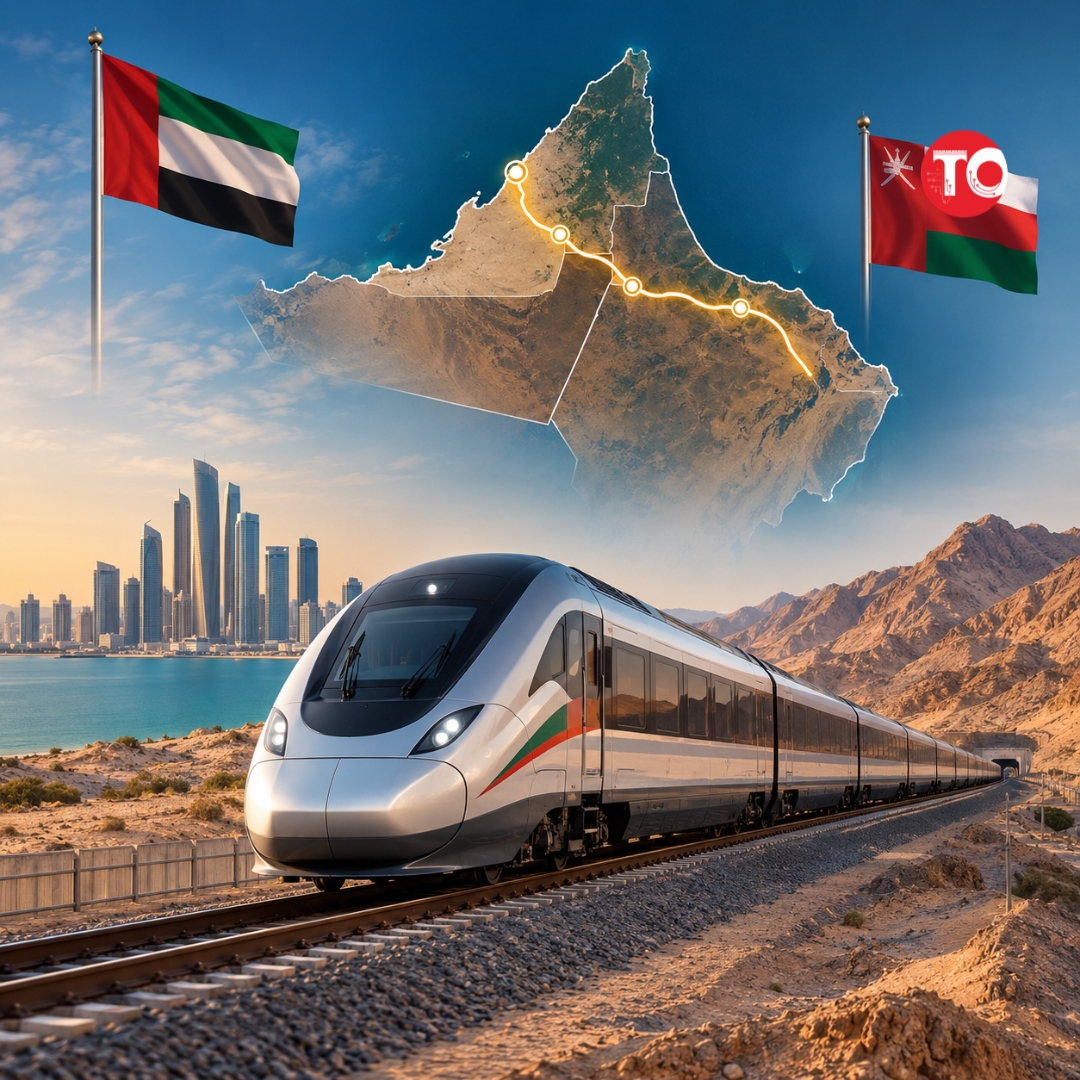
Oman Formally Ratifies Bilateral Railway Agreement with the UAE
The Sultanate of Oman has formally ratified its landmark railway agreement with the United Arab Emirates, delivering major momentum to the $2.5 billion Hafeet Rail initiative. The strategic cross-border infrastructure deal establishes the legal and operational framework required to construct, manage, and operate a unified rail corridor linking both Gulf nations. This ratification represents a monumental milestone in accelerating economic integration and land transportation across the Arabian Peninsula.
Connecting Sohar to Abu Dhabi with High-Speed Freight and Transit
Spanning 238 kilometers, the railway line directly connects Oman's industrial port city of Sohar to the wider UAE national rail network via Al Buraimi and Al Ain. Once fully operational, passenger transit times will drop significantly, enabling travel from Sohar to Abu Dhabi in approximately 100 minutes and from Sohar to Al Ain in roughly 47 minutes. The modern infrastructure is designed to accommodate both passenger transit and heavy freight transportation, dramatically accelerating trade and logistics flows between both countries.
Modern Passenger Capacity and Express Operating Speeds
The network's high-speed passenger trains are engineered to operate at top speeds of up to 200 kilometers per hour, carrying between 350 and 400 passengers per trip. Beyond passenger travel, the dedicated heavy-freight corridor will carry millions of tonnes of commercial goods, bulk commodities, and industrial raw materials annually. Diverting heavy freight from regional highways onto rail lines will lower logistics costs, decrease road traffic congestion, and lower carbon emissions across the regional transport sector.
Construction Milestones and First-of-Its-Kind Gulf Rail Link
Construction on the Hafeet Rail project has progressed rapidly, with overall project completion already reaching approximately 40 percent. The cross-border network is slated to become the first operational railway of its kind directly linking two Gulf Cooperation Council (GCC) countries. The engineering milestone showcases regional technical cooperation and serves as a foundational blueprint for future interconnected rail infrastructure across the broader Middle East.
Strategic Economic Alignment with Regional Growth Initiatives
Ultimately, the ratification of the Hafeet Rail agreement advances the economic objectives of both Oman Vision 2040 and UAE national development plans. By creating a seamless industrial corridor connecting Sohar Port with UAE commerce hubs, both nations strengthen supply chain resilience and boost bilateral trade potential. As civil engineering works near completion, the Hafeet Rail project stands as a transformative cross-border infrastructure project set to redefine regional mobility.