


Microsoft Exposes AI-Driven Global Supply Chain Breach
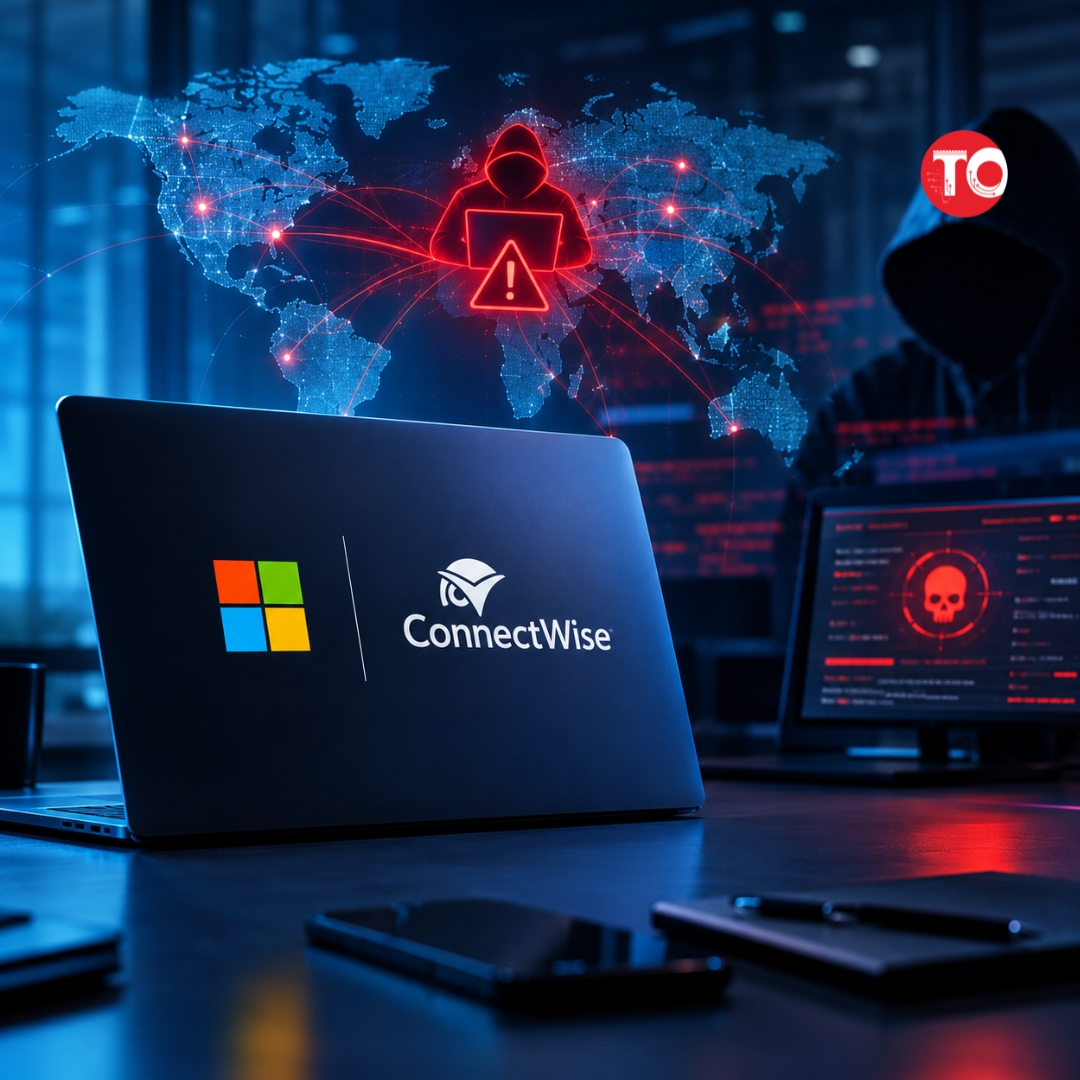
Tech giant Microsoft has issued a critical threat intelligence warning revealing that China-aligned hackers compromised IT services provider ConnectWise in a major global cyberattack campaign. Tracked by security researchers as Storm-0940, the threat actor targeted ConnectWise's Cloud Backup application framework to launch automated secondary attacks against downstream Microsoft 365 customer accounts. The incident highlights an unprecedented escalation in supply chain exploitation, where compromised enterprise software credentials were leveraged to gain rapid access across hundreds of target organizations worldwide.
Agentic AI Framework Accelerates Hacking Velocity and Automation
A defining element of the campaign is the adversary’s deployment of the "ARTEX" agentic artificial intelligence framework to scale offensive operations exponentially. By integrating large language model (LLM) agents into their attack workflows, the hackers automated reconnaissance, password spraying, and OAuth application credential abuse at machine speeds. Microsoft reported that the AI-driven tool executed up to 2,900 automated sign-in attempts per minute across more than 2,250 tenant environments, achieving initial cloud system compromise in under three hours—a velocity that severely limits traditional human incident response timeframes.
Global Industry Target Demographic and ConnectWise Response
The AI-enhanced attack campaign targeted a broad spectrum of critical sectors globally, including aerospace, defense, energy, financial services, legal, technology, semiconductor manufacturing, and government agencies. In response to the breach, ConnectWise proactively suspended affected cloud services—including Cloud Backup, SaaS Security, and Cloud Management—to contain potential authorization risks. However, security teams warn that disabling central application connections does not automatically revoke unauthorized administrative access or persistence mechanisms previously established inside individual enterprise cloud environments.
Strategic Enterprise Mitigation and Defensive Security Steps
To defend against highly automated, AI-accelerated cyber threats, cybersecurity authorities and IT leaders advocate for immediate implementation of robust defense-in-depth measures:
- Enforce Zero-Trust and Multi-Factor Authentication (MFA): Mandate phishing-resistant MFA across all corporate accounts and restrict unverified OAuth application permissions.
- Audit Microsoft 365 Tenant Logs: Review identity logs for suspicious high-volume authentication attempts, unauthorized global administrator role creation, or modified application credentials.
- Maintain Patch and Software Updates: Keep all software, remote management platforms, and cloud endpoints patched to eliminate known vulnerability vectors.
- Deploy Behavioral Threat Monitoring: Utilize automated, AI-powered defensive monitoring tools capable of identifying and isolating machine-speed brute-force attacks in real time.
The Evolving Horizon of AI-Driven Cyber Warfare
Ultimately, the ConnectWise cloud compromise signals a paradigm shift in the global threat landscape as nation-state threat actors integrate agentic AI into offensive cyber operations. As malicious actors continuously leverage automated platforms to streamline network penetration, organizations must shift toward proactive threat hunting and automated cyber resilience frameworks. Maintaining strict digital hygiene and robust security architectures remains vital to safeguarding global cloud infrastructure against automated breach campaigns.