




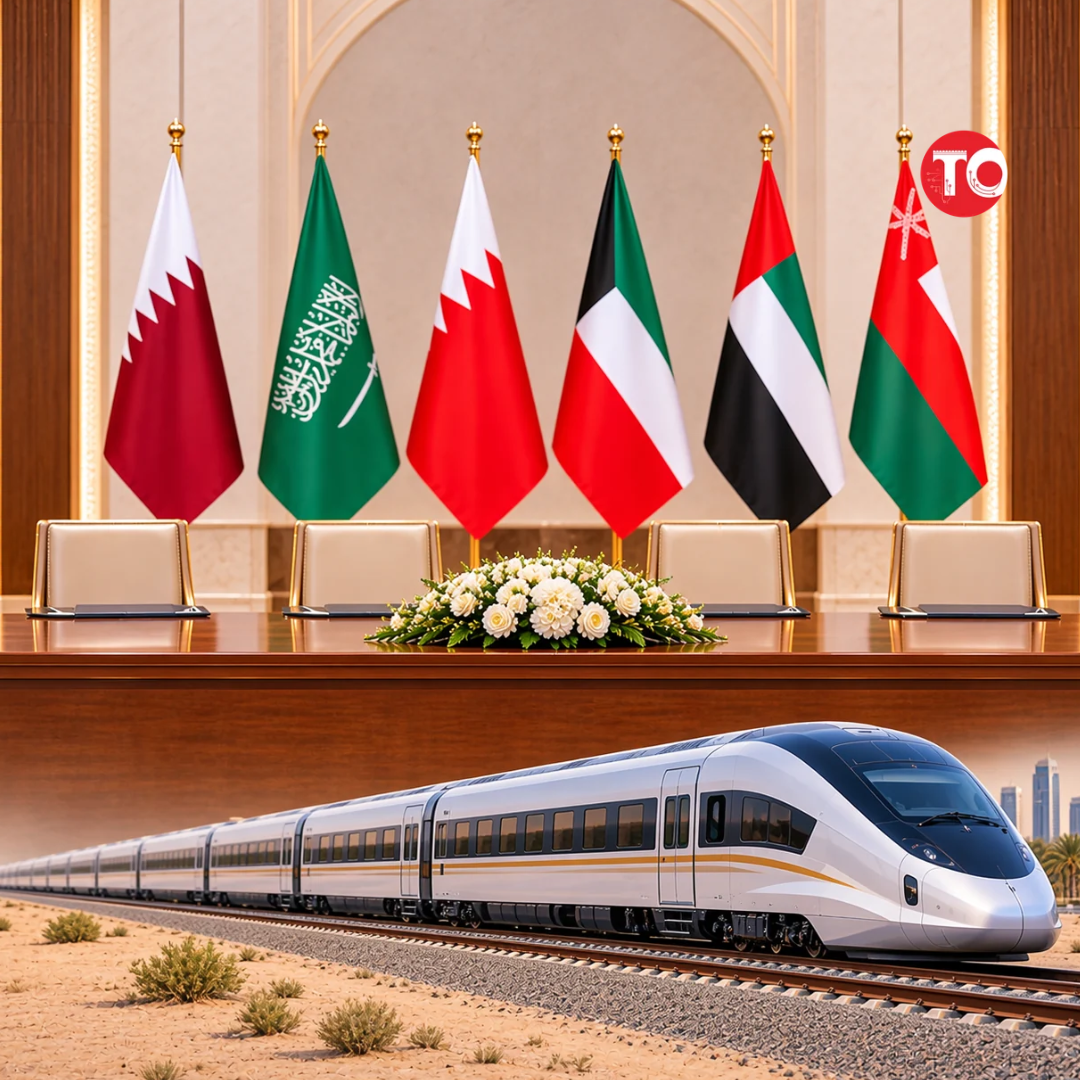
GCC Ministers Convene in Manama to Ratify Unified Rail Framework
Transport ministers from all six Gulf Cooperation Council (GCC) member states—Qatar, Saudi Arabia, Bahrain, Kuwait, the United Arab Emirates, and Oman—have convened in Manama, Bahrain, to sign the historic General Railway Agreement. Chaired by Bahrain’s Minister of Transportation and Telecommunications, Sheikh Abdullah bin Ahmed Al Khalifa, the high-level summit establishes the unified legal, regulatory, and operational frameworks required to construct and run the 2,117-kilometer cross-border network. The agreement marks the most significant regulatory milestone for regional transit integration since the inception of the megaproject.
Operational Specifications, High-Speed Links, and Technical Integration
The 2,117 km regional rail alignment will function as a dual-purpose transit network engineered for high-density passenger traffic and heavy industrial freight:
- Passenger & Freight Speeds: Passenger trains are engineered to operate at top speeds of up to 200 km/h, while freight operations will run at speeds between 80 km/h and 120 km/h.
- Bilateral Cross-Border Links: Dedicated corridors, such as the 238 km Hafeet Rail link connecting Suhar in Oman to Abu Dhabi and Al Ain, will reduce travel times to 100 minutes (Suhar–Abu Dhabi) and 47 minutes (Suhar–Al Ain).
- Fixed Link Infrastructure: Bahrain’s regional connection relies on the planned King Hamad Causeway, a multi-modal fixed link providing direct rail and road connections to Saudi Arabia.
- Interoperable Systems: The network enforces standardized European Train Control System (ETCS) Level 2 signaling and uniform axle-load limits across all six participating countries.
Passenger Projections and Supply Chain Resilience
The multi-billion-dollar infrastructure initiative is projected to carry approximately 8 million passengers annually by 2050, offering a sustainable, low-emission alternative to regional air corridors and congested highway travel. From a logistics perspective, the railway will connect major deepwater seaports—including Duqm, Suhar, Khalifa Port, and King Abdulaziz Port in Dammam—allowing heavy cargo to bypass strategic maritime choke points like the Strait of Hormuz. Initial freight node projections estimate handling capacity exceeding 13 million tons of bulk freight and 600,000 containers annually at key regional hubs.
Economic Transformation Under GCC Strategic Visions
Ratifying the General Railway Agreement directly advances the economic diversification and sustainable mobility targets outlined under national development strategies, including Oman Vision 2040 and Saudi Vision 2030. Unifying regional logistics networks drives intra-GCC trade, lowers industrial transport costs, and expands regional tourism. By replacing thousands of daily long-haul diesel truck journeys with electrified freight corridors, the rail network significantly lowers carbon emissions across Gulf transport corridors.
Accelerating Gulf Integration Toward the 2030 Target
Ultimately, the formalization of the General Railway Agreement in Manama sets an unbroken trajectory toward operational completion by December 2030. Although full network integration across all six capitals is targeted for the end of the decade, fully completed bilateral segments—including the UAE–Oman link—are scheduled to commence commercial services earlier. The landmark agreement secures the Gulf's transition into an interconnected, multi-modal economic bloc.