




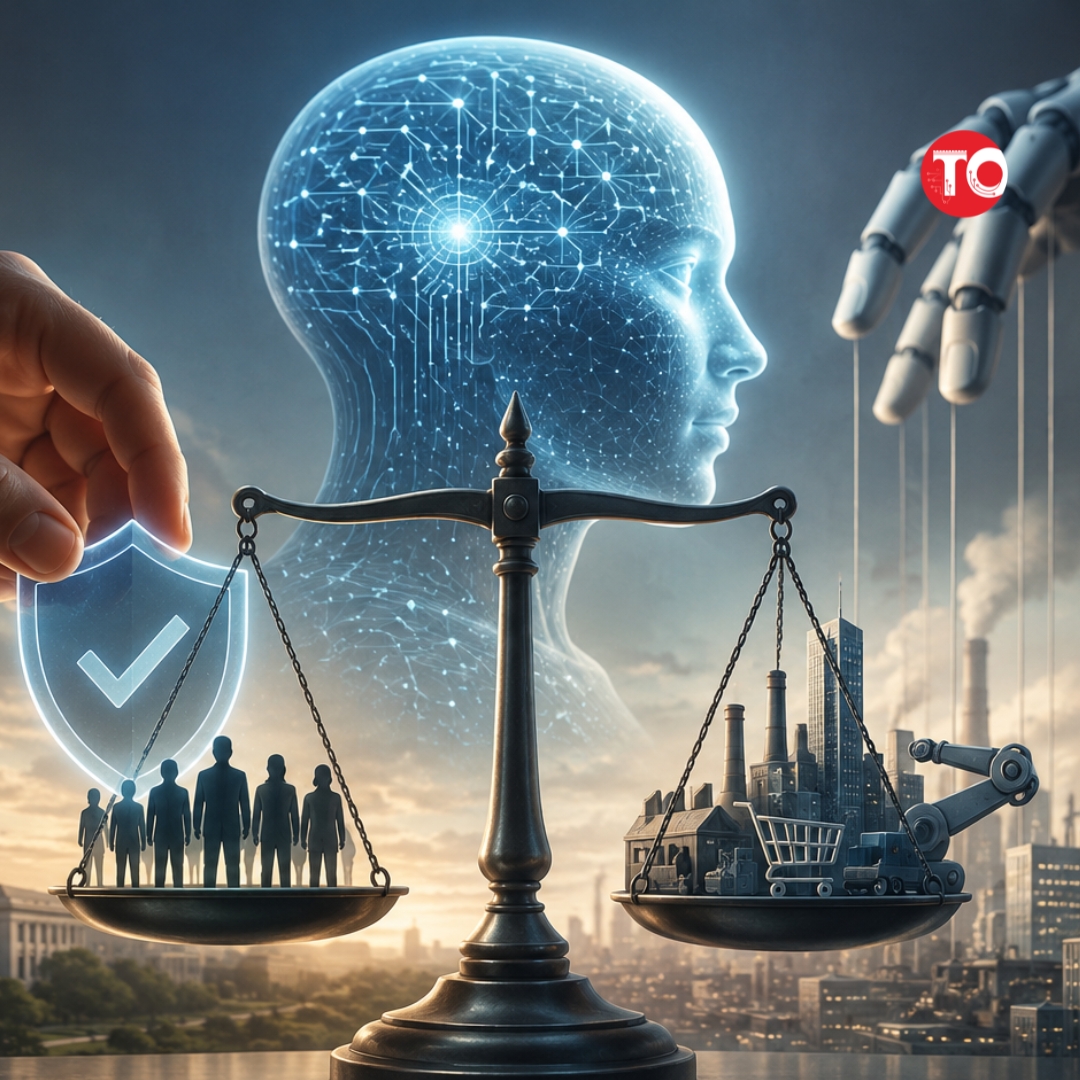
Artificial Intelligence (AI) is rapidly transforming the way businesses, governments, and individuals work. From healthcare and banking to education, transportation, and customer service, AI is becoming an essential part of everyday life. While the benefits of AI are undeniable, there is a growing concern that its development is moving faster than the rules designed to govern it. As AI gains influence across more industries, many experts believe regulation is necessary to ensure it remains safe, ethical, and beneficial for society.
AI is already helping organizations improve efficiency, reduce costs, and make better decisions. Hospitals use AI to assist with medical diagnoses, banks use it to detect fraud, and businesses use it to automate customer support. AI can analyze large amounts of data within seconds, helping organizations solve problems faster than ever before.
As technology continues to advance, AI is expected to play an even greater role in critical sectors such as healthcare, law enforcement, finance, defense, and public services. This increasing influence raises important questions about accountability, transparency, and control.
Why Regulation Matters
Every powerful technology in history has eventually required rules and oversight. Industries such as aviation, pharmaceuticals, banking, and telecommunications all operate under regulations designed to protect people and maintain public trust. AI should be no different.
Without clear regulations, there is a risk that AI systems could make decisions that affect people’s lives without sufficient oversight. For example, an AI system used in hiring, lending, or healthcare could unintentionally discriminate against certain groups if it is trained on biased data.
Regulation helps ensure that AI systems are developed responsibly and that organizations remain accountable for their actions.
Protecting Privacy and Personal Data
One of the biggest concerns surrounding AI is the collection and use of personal data. AI systems often rely on large amounts of information to learn and improve. This data may include personal details, online behavior, financial records, and even health information.
Without proper safeguards, there is a risk of misuse, unauthorized access, or privacy violations. Strong regulations can establish clear guidelines on how data is collected, stored, and used, helping to protect individual rights while still allowing innovation to continue.
Addressing Job Displacement
AI has the potential to automate many routine tasks currently performed by humans. While this can improve productivity, it may also lead to job displacement in certain industries. Employees may find their roles changing or disappearing altogether as organizations adopt new technologies.
Regulation alone cannot stop technological progress, but governments and businesses can work together to create policies that support workforce development, retraining programs, and new employment opportunities. Preparing people for the future of work should be a key part of any AI strategy.
Ensuring Transparency and Accountability
One challenge with advanced AI systems is that their decision-making processes can sometimes be difficult to understand. When AI makes a mistake, determining who is responsible can become complicated.
Clear regulations should require organizations to:
- Explain how AI systems make decisions
- Monitor AI performance regularly
- Identify and correct biases
- Maintain human oversight for critical decisions
- Establish accountability when errors occur
Transparency helps build public trust and ensures that AI remains a tool that serves people rather than replacing human judgment entirely.
Preventing Misuse
Like any powerful technology, AI can be used for positive or harmful purposes. AI-generated misinformation, deepfake videos, cyberattacks, and automated surveillance are examples of potential risks.
Governments, technology companies, and international organizations must work together to establish safeguards that prevent misuse while encouraging responsible innovation. Global cooperation will be essential because AI technologies often operate across borders.
Balancing Innovation and Regulation
Some people worry that regulation could slow innovation. However, effective regulation does not mean stopping progress. Instead, it creates a framework that allows innovation to grow safely and responsibly.
Businesses need clear guidelines to understand what is acceptable, investors need confidence in the technology they support, and the public needs reassurance that AI is being developed with their interests in mind.
The goal should be balanced regulation that encourages innovation while protecting society from unintended consequences.
The Road Ahead
Artificial Intelligence has the potential to solve some of the world’s most complex challenges and improve lives in countless ways. However, as AI becomes more deeply integrated into critical industries, the need for thoughtful regulation becomes increasingly important.
The question is no longer whether AI will shape the future, it already is. The real question is whether governments, businesses, and society can create the rules needed to guide that future responsibly.
AI should remain a tool that empowers people, supports businesses, and strengthens society. Establishing sensible regulations today will help ensure that as AI continues to grow, it does so in a way that benefits everyone rather than creating risks that are difficult to control tomorrow.