


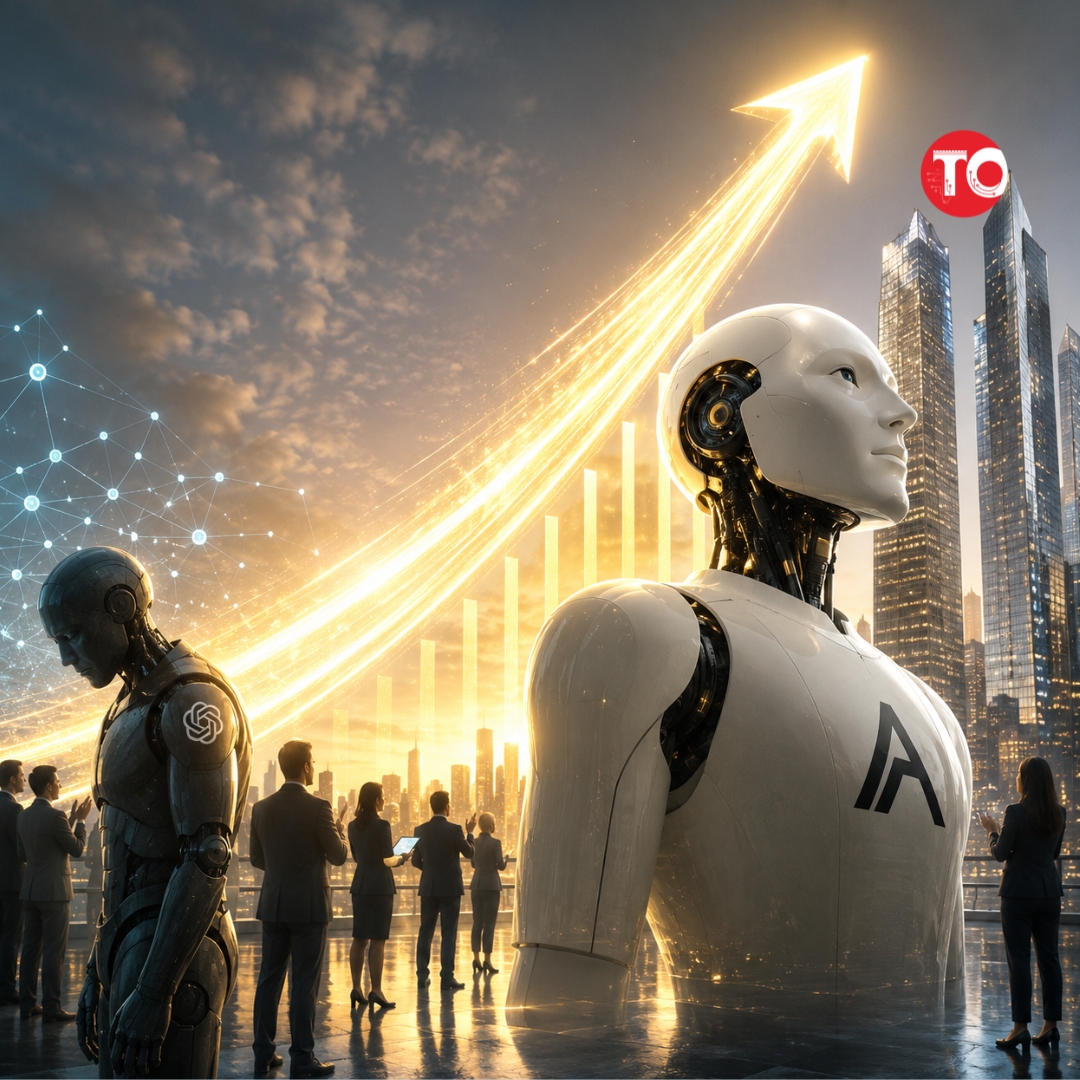
In an unprecedented shift within the generative artificial intelligence landscape, Anthropic has overtaken rival OpenAI in both valuation and revenue growth velocity, clocking a staggering $47 billion annualized revenue run-rate as of May 2026. This milestone marks the fastest organic revenue acceleration in global corporate history, soaring from just $1 billion in annualized revenue roughly 17 months prior in December 2024. This massive trajectory launched from an $87 million run-rate in January 2024, climbing to $9 billion by the close of 2025, before experiencing a hyper-acceleration in early 2026: hitting $14 billion in February, $19 billion in March, $30 billion in April, and culminating at $47 billion by mid-May. The AI safety lab turned commercial titan is currently adding an average of $96 million in new annualized revenue every single day.
Following a massive $65 billion Series H funding round closed in late May 2026, Anthropic's post-money valuation skyrocketed to $965 billion, successfully positioning it as the most valuable artificial intelligence company on Earth. This monumental funding round effectively pushed Anthropic past OpenAI, whose most recent private market valuation anchored at $852 billion. To formalize its transition to public markets, Anthropic confidentially submitted its draft S-1 registration statement to the U.S. Securities and Exchange Commission (SEC) on June 1, 2026, with an initial public offering (IPO) tentatively scheduled for October 23, 2026, on the Nasdaq exchange.
The Enterprise Engine and Coding Moat Driving the Numbers
Unlike consumer-heavy platforms, Anthropic's explosive growth is powered almost exclusively by high-yield enterprise adoption and business API volume rather than individual retail subscriptions. The structural drivers behind this momentum highlight a rapidly expanding corporate footprint:
- Million-Dollar Contracts: The number of enterprise accounts spending over $1 million annually on Claude has doubled in less than two months, jumping from 500 accounts to more than 1,000 active corporate contracts.
- Massive Customer Base: The company boasts 300,000 total business clients, with 100,000 distinct enterprises deploying Claude models natively via the Amazon Bedrock cloud ecosystem.
- Claude Code Dominance: Anthropic's agentic, terminal-native programming tool, Claude Code, has acted as the company's primary commercial catalyst. The software development assistant secured an astonishing $2.5 billion in annualized revenue by February 2026 alone.
- Core Workflow Integration: Global industry leaders—including Netflix, Spotify, KPMG, and Salesforce—have moved past the experimental phase and are actively building their core operational and data workflows directly on top of Claude's architecture.
Diverging Trajectories: A Structural Comparison
While both market leaders are locked in an intensive infrastructure and capability race, their underlying economic blueprints have drastically diverged. The deep structural divide between OpenAI and Anthropic underscores a massive difference in capital efficiency:
| Metric / Financial Projection | OpenAI | Anthropic |
| Projected 2026 Net Loss | $14 billion | Approaching Operating Profitability (Q2 2026 target fulfilled) |
| Anticipated Break-Even Year | 2030 | 2027 (with cash-flow breakeven targeted for 2028) |
| Projected Annual Training Costs (by 2030) | $125 billion | $30 billion |
| Primary Revenue Driver | Consumer Subscriptions & Traffic | Enterprise APIs & Agentic Tools (~80-85% mix) |
While OpenAI continues to burn immense capital reserves to sustain its consumer footprint—spending nearly four times as much as its competitor on training infrastructure while generating less top-line revenue—Anthropic has quietly carved out a highly profitable niche. By prioritizing disciplined enterprise deployment under the low-profile stewardship of CEO Dario Amodei, Anthropic has fundamentally flipped the script on generative AI economics. As the market moves closer toward the marquee IPOs of the year, Anthropic’s business model demonstrates that the ultimate prize in the first phase of the AI race belongs to the company that successfully integrated itself into the plumbing of global enterprise software.