




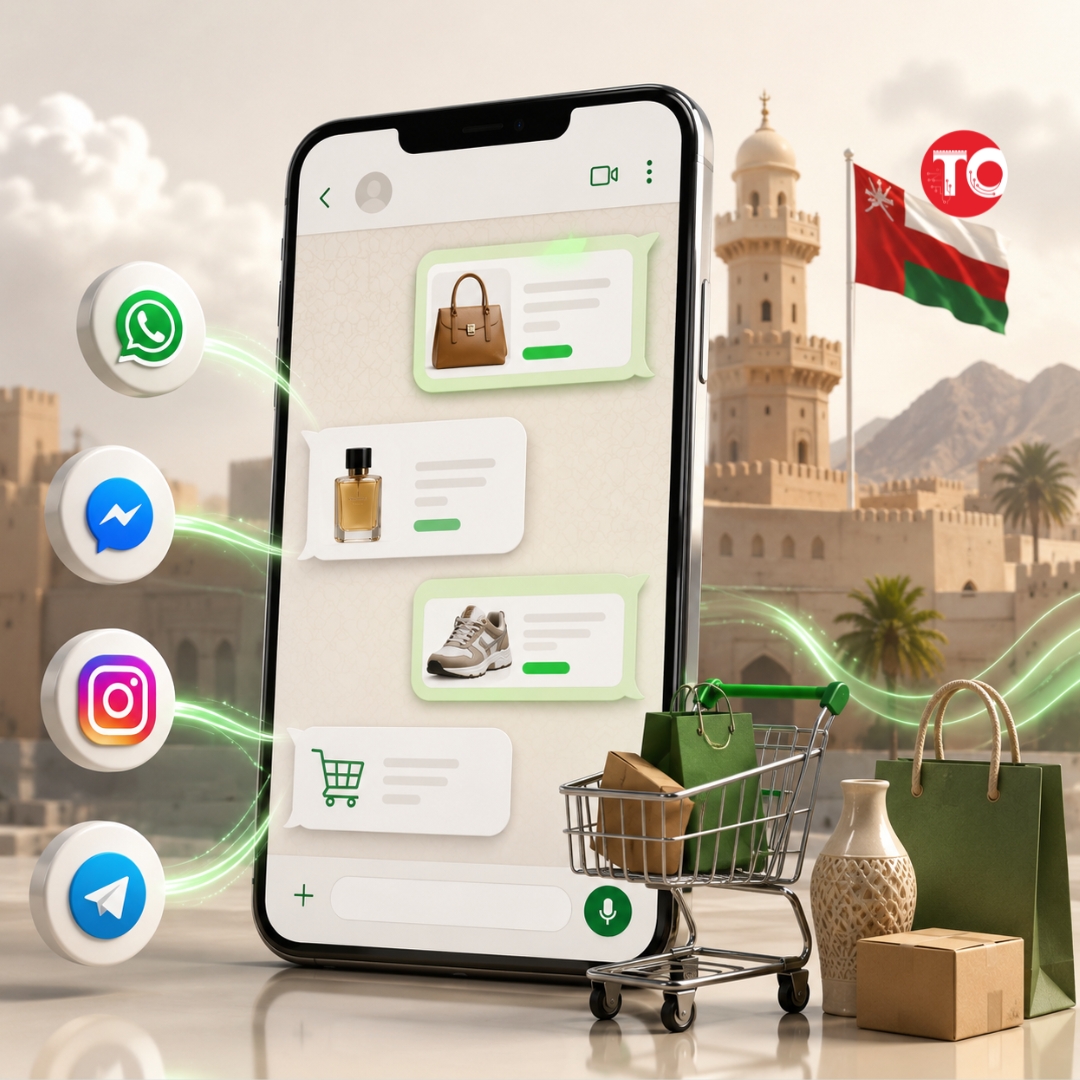
A growing number of Omani businesses are transforming the messaging applications already installed on their customers' smartphones into fully fledged online storefronts, driven by an artificial intelligence wave that is reshaping retail dynamics across the Sultanate and the wider Gulf region. This rapid shift is steering the e-commerce landscape away from traditional standalone apps and websites toward conversational channels—predominantly WhatsApp—where shoppers can seamlessly browse products, place orders, complete payments, and receive their invoices entirely within a single chat window. Behind this structural evolution is a wave of locally built AI platforms wagering that the most efficient route to digital sales runs directly through communication tools that consumers interact with every day.
Among the prominent pioneers driving this movement is Wiya, an Omani AI firm that has established the WhatsApp storefront as its flagship product. The company’s founder and chief executive officer, Talal al Marhoon, maintains that the business case for conversational commerce in Oman is incredibly simple: the customers are already actively there. In Oman and the Gulf, WhatsApp functions as a natural, everyday component of the modern purchasing journey where customers instinctively want to inquire, order, and pay. Rather than forcing a consumer to download a separate, heavy application or navigate a complicated website, the platform allows them to complete their entire transaction within a familiar digital space.
The specific operational hurdle that this conversational technology aims to eliminate is a fragmented workflow shared by many small and mid-sized enterprises. Traditionally, customer inquiries are scattered across disjointed platforms—including WhatsApp, Instagram, and isolated company websites—leading to slow reply times, weak follow-up tracking, and ultimately, significant amounts of lost business. Al Marhoon emphasizes that many local organizations lose customers not due to a weak or uncompetitive product, but purely because of weak communication boundaries, especially when buyers tied to official working hours lose sales to competitors who can answer faster.
To bridge this gap, Wiya’s platform introduces end-to-end automation to customer service operations while directly folding secure payment and invoicing protocols into the active chat. Highlighting the practical, grassroots impact of the technology, Al Marhoon shared the story of a traditional village shopkeeper selling water and consumer goods. While the merchant had previously been attempting to manually process orders over WhatsApp, he simply could not keep pace with the influx of incoming messages, frequently losing vital sales without even realizing it. By implementing conversational AI layers, small-scale business owners can instantly scale their operations, capture every inquiry, and maintain a 24/7 retail presence without increasing overhead costs.