


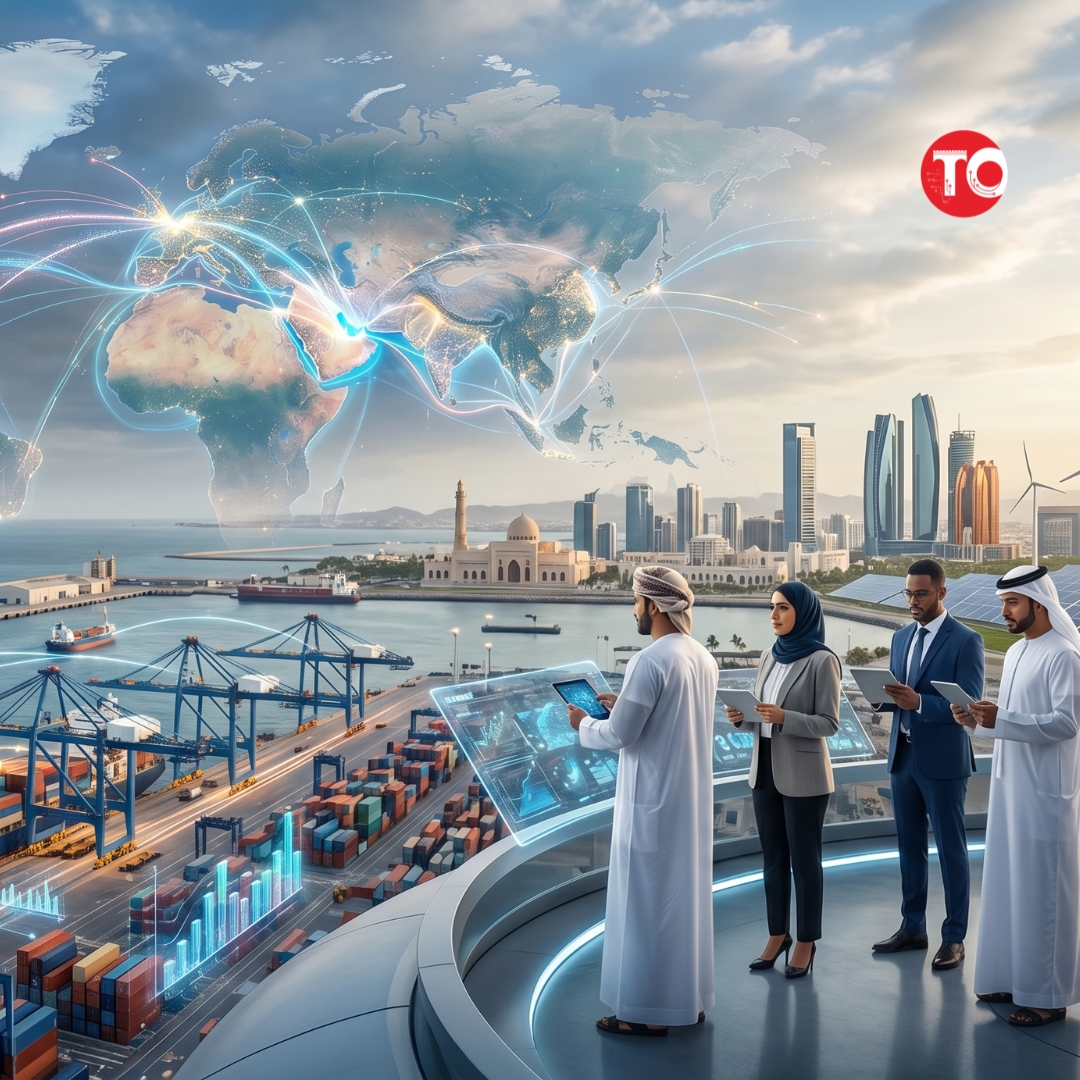
To understand how countries react to the global economic landscape and the evolution of trade
policy, technological change, and economic resilience are emerging key areas of interest. In the
last few decades, the global markets have been severely shaken by geopolitical events, shifts in
trading laws, upheavals in trade routes, financial crises, epidemics, and commodity price volatility.
All these challenges have created uncertainty in international trade and have forced the
government's economists to reconsider their economic policies. It creates a lot of uncertainty for
developing and resource-intensive economies, as external shocks can have a direct effect on
national development, economic growth, employment, and industrial productivity. Energy exports
and international trade have been a part of the Omani economy from the early days and continue
to play a pivotal role in assessing the impact of the global shock and how the country is preparing
to recover through policy adjustment, technological innovation, and economic transformation.
Trade policy uncertainty relates to uncertainty surrounding international trade, tariffs,
import/export restrictions, political negotiations, and economic sanctions. Businesses, investors,
and policymakers are hindered in their decision-making processes because of uncertainty in trade.
Firms can postpone investment, limit growth, or consider alternative markets to minimize risks.
Government can also find itself in a situation where it is losing competitiveness, losing foreign
investment, or losing economic growth. Trade policy uncertainty is of particular concern to Oman
because the economy has been more energy-intensive, and it has had more trade ties with the rest
of the world than other economies. The changes in global demand, regional political instability, or
changes in international trade policy can directly affect public revenue, industrial development,
and investor confidence. Given these uncertainties, Oman's economic policies and approaches
must be resilient, reducing the impact of external shocks.
Among the key factors that have led to economic change in the face of pressures has been
technological change. The technological evolution is from digital systems and automation to
artificial intelligence and smart logistics, from the analysis of data to innovative business models.
The, potential for these technologies to increase economies' efficiency and reduce operating costs,
improve productivity, and create opportunities for diversification are opportunities that should not
be missed. Technology supports the government and organizations to be better prepared to react to
market change in an uncertain world. Technological innovations are the basis for quick decisions,
coordination of supply chains, optimal use of resources, and competitiveness on the international
market. The countries pursuing sustainable growth have seen technological development as an
economic opportunity, and even a necessity.
Inevitably, Oman's importance in the technological shift as a key element in its national
development has been heightened. As a result of the intense competition in the world market, the
limitations of traditional economic models, and the increased significance of knowledge-based
sectors and technologies, the country has made an investment in its digital infrastructure,
modernization of industries, renewable energy, and technologies. The goal of these is to lessen the
reliance on oil income and diversify the economy with innovation. The application of technology
is directed towards efficiency in operation, investment, and improvement in the competitiveness
of the country in regional and international markets, both in the public and private sectors. Oman
tries to develop an economic structure capable of meeting the challenges of the future in this
process of modernization. Economic resilience is the ability of an economy to withstand shocks,
to adapt to new conditions, and to bounce back in the event of a disruption without becoming
unstable or contracting. Factors that shape resilience are diversification, strengthening institutions,
flexibility in policies, technological capacity, and human capital building. An economy with only
one industry is more vulnerable during a global crisis than an economy that has developed and
created an innovative and diversified economy. A major thrust of Oman's strategy for economic
resiliency is to protect the state from the cyclicality of oil prices, trade uncertainty, and external
economic shocks. Oman's response plan to global shocks is a message of sustainability to a longterm and economic approach. The national programs with an emphasis on industrial
diversification, infrastructure development, technological innovation, and growth of the private
sector are indicative of the efforts to make the economy more balanced and adaptive. The country
has been slowly identifying these sectors as ‘hot spots' in the economic transition, primarily
logistics, tourism, manufacturing, renewables, and digital services. The relationship between trade
policy uncertainty, technological change, and economic resilience provides an interesting lens to
investigate the efforts Oman is making in building the foundations of its economic resilience in
the face of future challenges.