



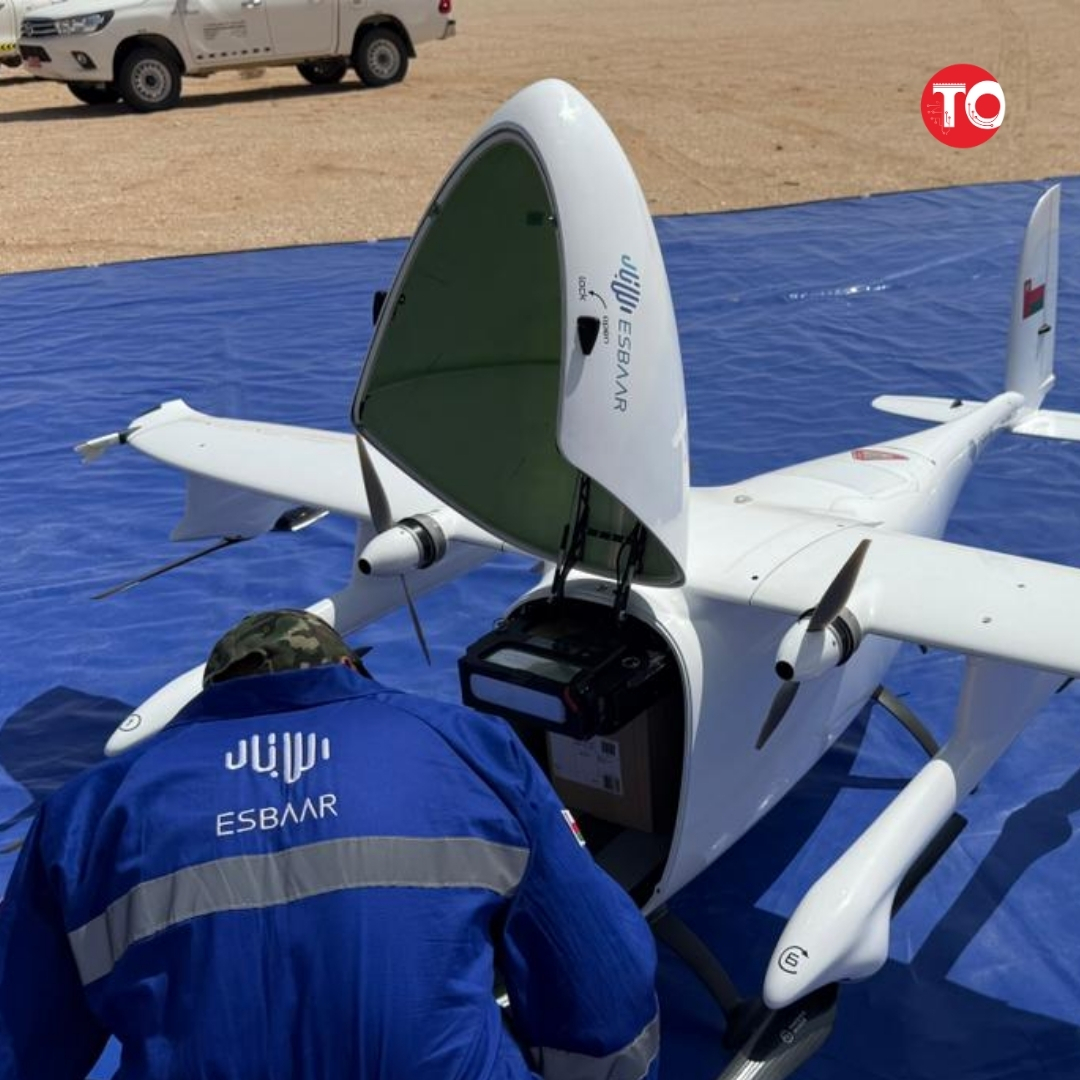
Esbaar Artificial Intelligence & Drones is changing how goods move in Oman. Their new cargo drone recently finished successful pilot program in Haima, proving that long-distance drone delivery is no longer just an idea, it is a reality.
Designed for long missions, the Nesr drone showed it could handle the tough desert environment while staying connected to its pilots from far away.
Success in Haima
In February 2026, the operations team hit several major milestones during their field tests:
- Long-Distance Travel: The drone completed a 124.4 km flight, staying stable the entire time.
- Day and Night Action: The crew proved the drone can fly safely at any hour.
- Strong Tech: Using a mix of satellite and cellular signals, the drone never lost contact with the ground team.
- Safety First: The project met high international standards (ISO), ensuring every flight was professional and secure.
Why Drones are Better for Oman
The oil and gas industry in Oman often works in remote, dangerous areas. Traditional trucks are slow and can be risky for drivers. Here is how Nesr helps:
- Much Faster Delivery: A trip that takes four hours by truck can be done in under one hour by drone. This is especially helpful at night when trucks aren’t allowed to move in certain oil fields.
- Increased Safety: By flying over the desert instead of driving through it, companies can avoid road accidents and keep their workers out of harm's way.
- Lower Costs: Drones use less energy than heavy trucks and require fewer people to manage. They aren't slowed down by bad roads or traffic.
- Reaching Remote Areas: The Nesr drone can reach deep into the desert (like Block 07) where it is very difficult for normal vehicles to go.
Leading the Region
Logistics in the Middle East can be difficult due to regional tensions or blocked trade routes. Esbaar’s drones provide a reliable backup. Since these drones fly locally and automatically, they aren't affected by many of the problems that slow down ships or planes.
This project also supports Oman Vision 2040. By using Omani-made technology and working with local partners like SINAN Advanced Industries, Esbaar is helping the country become a leader in high-tech transport.
The Ministry of Transport, Communications and Information Technology (MTCIT) initiative to accelerate the deployment of Advanced Air Mobility (AAM) solutions across Oman, focuses on enabling unmanned aviation systems, fostering a regulatory environment that supports BVLOS operations, and positioning Oman as a regional testbed for next-generation air logistics.
The ministry’s vision emphasizes unlocking economic diversification, building sovereign technological capability, and promoting sustainable, low-carbon mobility systems objectives that match precisely with Esbaar’s operational ambitions. By proving long-range drone cargo capability through the Drone Cargo program, Esbaar provides tangible evidence of how AAM can enhance logistics resilience, reduce emissions, strengthen supply chains, and support both public and private sector service delivery. This alignment ensures that Esbaar’s work is not just an operational success, but a strategic enabler of Oman’s national transformation agenda and the wider GCC shift toward advanced, autonomous mobility ecosystems.
Conclusion
The Nesr drone tests are a huge win for Oman. This technology saves time, cuts costs, and keeps people safe. As big companies like PDO, OQ, CCED, and OXY look for better ways to work, Esbaar is ready to lead the way with a smarter, faster, and greener delivery system.