




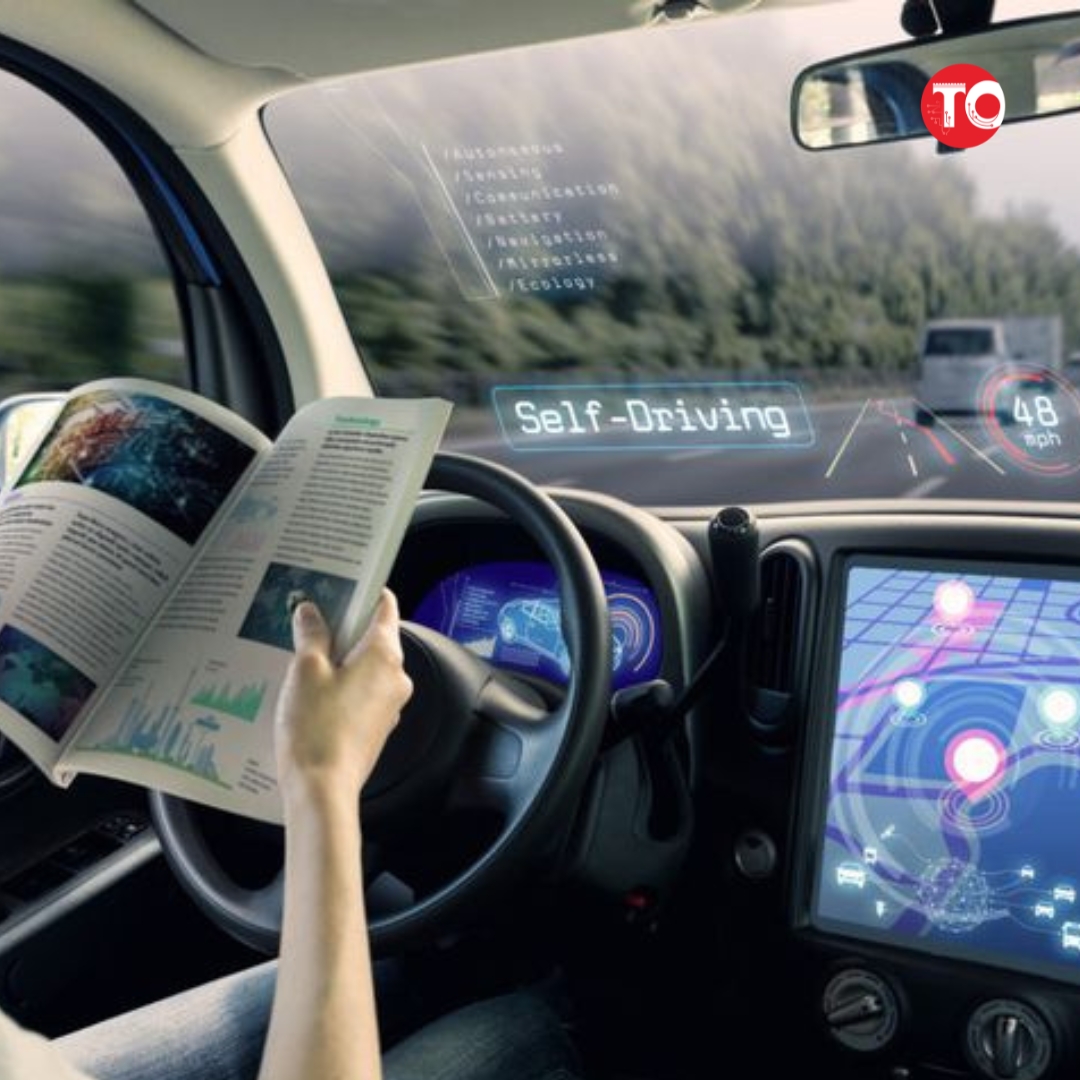
Two days ago, I was driving back from Dubai. It was late in the evening. There was less traffic and the road was clear to some extent. The car I was driving was virtually doing most of the work — from maintaining the speed, keeping in lane and slowing down smoothly as traffic built up in some areas. While my hands were still on the wheel, of course, my role was a bit different at times. I was acting more as a supervisor and less of a driver per se. I used the cruise control for maintaining the speed and slowing down during traffic.
I used the Lane Keep (Centring) Assist (LKA or LCA) technology to help me keep the car within the lane (if it drifted outside the markings on the road) and finally, the speed limit reader kept notifying me of the speed limit (to ensure I stayed safe and within the allowed driving speed limit set on the road).
At the same time, I also recalled getting one of me reviewing a car that parked itself (without human intervention). This made my mind wonder whether self (autonomous) driving will ever become a reality soon and hence I decided to focus this week's article on the reality of the matter.
There has been a lot of promise of self-driving cars. Almost every technology-related conference and exhibition attended, be it locally or regionally, had some sort of self-driving car (as a concept) demonstrated. Virtually every tech giant's announcement makes it sound like humans will soon be optional behind the wheel.
Nevertheless, most of those promises pass deadlines and automakers still cannot manage to release, let alone launch, fully autonomous (self-driving) cars that you can readily see on the road (at least not here in Muscat or any of the neighbouring countries; I have seen none as of date). Yes, I have seen it in the science fiction movies. Yes, I hear from few friends and colleagues who saw some self-driving cars in a controlled environment. Yet, all that is not to be confused with official ones that are ready to be deployed in the market, where you can go in a store and get yourself one, like how you would today with an electric vehicle (EV). EV was once a concept yet is a reality today (maybe not too successful). However, self-driving cars are not and remain toys we may see but not have/play with, at least not in the near future, I reckon.
Today, almost every new car you buy comes with adaptive cruise control, lane-keeping assist, automatic emergency braking, blind-spot monitoring and a self-parking feature. None of these looked or sounded normal or could have been real decades ago. I see the same happening with self-driving ambitions, yet not very soon.
There is a lot that needs to be done — starting from regulators all the way to predictable situations/scenarios, eg, busy streets, pedestrian crossings, construction zones, complicated roads, different cities/streets/rules, etc. We as humans can adapt fast, yet machines need data, training and indeed predefined logic.
That today, even with the advancement and progress of AI, is not literally easy and catastrophic results will happen if introduced abruptly. Think of it: if a self-driving car makes a mistake, who will be responsible? This and more questions need to be answered before we see self-driving cars as a reality.
To conclude my article this week, I would like to note that I by no means negate having self-driving cars, nor am I not supporting the bold vision, yet I do not see this happening anytime soon nor in the near future. Humans continue to control and at least supervise today whatever is digitised. Until we catch up again next week, keep staying in control.