


Creativity, Copyright & the Future of Media
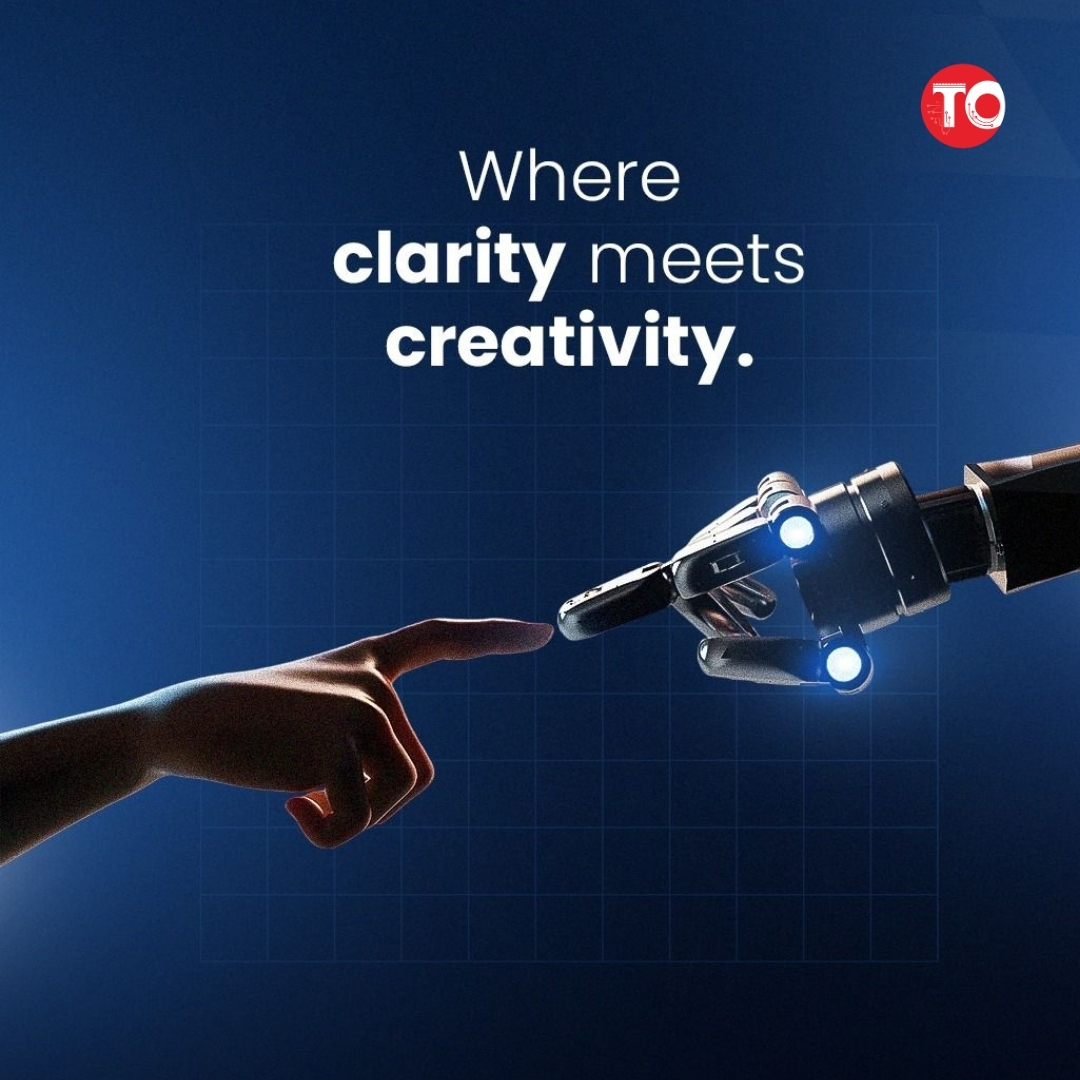
Who owns the art when the artist is an algorithm? What happens to human creativity when machines learn to dream?
A Painting With No Painter
In the autumn of 2022, a digital artwork called ‘Theatre D’Opéra Spatial’ won first prize at the Colorado State Fair's fine arts competition. The image was breathtaking, cinematic, mind-blowing. But when the creator, Jason Allen, revealed it had been made using an AI tool called Midjourney, the art world exploded.
Artists were furious. Judges were confused. Audiences were divided. Some called it visionary. Others called it cheating. And tucked inside all that noise was a question nobody quite knew how to answer:
If a machine makes something beautiful, who gets the credit? Who gets the copyright? And what does that mean for the millions of writers, illustrators, photographers, and musicians whose work is the foundation upon which these AI systems were built?
These are not hypothetical questions anymore. They are the defining creative and legal battles of our time.
The Scale of What Is Happening
The numbers are staggering. By 2025, it was estimated that AI tools generate over 15 million images every single day. More than all of humanity produced in photographs throughout the entire 19th century, every day, on repeat. Text-to-image tools like Midjourney, DALL-E, and Stable Diffusion have been used by over 100 million people. ChatGPT, Claude, Gemini, and others collectively handle more than a billion writing interactions every month.
In journalism, AI now writes thousands of financial reports, sports summaries, and weather updates daily. In music, tools like Suno and Udio produce full songs with vocals, instrumentation, and lyrics in seconds. In film, AI is being used to generate scripts, create visual effects, and even replicate actors' voices and likenesses.
We are not at the beginning of this shift. We are in the middle of it.
What the Science Says About Human Creativity
To understand why this moment feels so charged, it helps to understand what creativity is and why we care so deeply about it.
Neuroscientist Dr. Rex Jung, one of the world's leading researchers on creative cognition, describes human creativity as emerging from the interaction between two brain networks: the Default Mode Network (DMN) responsible for imagination, daydreaming, and self-reflection and the Executive Control Network, that organizes and refines ideas. When these two systems work together fluidly, that is when humans produce their most original, emotionally resonant work.
AI does not have a Default Mode Network. It does not dream, suffer, fall in love, fear death, or feel the loneliness of a Tuesday afternoon. It produces output based on patterns in data. Extraordinarily sophisticated patterns but patterns, nonetheless.
And yet, the outputs can move us. A piece of AI-generated music can make you cry. An AI-written story can feel deeply human. Why? Because the patterns AI has learned come from us and from centuries of human emotion, expression, and meaning-making. AI is, in a profound sense, a mirror held up to our collective creative output.
That is exactly what makes the copyright question so thorny.
The Copyright Crisis Nobody Fully Solved
Here is the core problem. The AI models that generate images, text, and music were trained on vast libraries of human-created work, books, articles, songs, paintings, photographs; most of it scraped from the internet without the creators' knowledge or consent.
Artists like Sarah Andersen, Kelly McKernan, and Karla Ortiz sued Stability AI, Midjourney, and DeviantArt in 2023, arguing that training AI on their work without permission or payment violated their copyright. In 2024, The New York Times filed a landmark lawsuit against OpenAI and Microsoft. Getty Images launched legal action against Stability AI in both the US and UK.
The legal outcomes have been mixed and still unresolved. Courts are grappling with a question the law was never designed to answer: is training an AI model on copyrighted work a form of infringement, or is it simply learning, the same way a human artist learns by studying the works of those who came before?
In the US, the Copyright Office ruled in 2023 that purely AI-generated content cannot be copyrighted, because copyright requires human authorship. But the lines blur when humans and AI collaborate. Who owns a novel that a human planned, directed, and edited, but an AI largely wrote? There is no clean answer yet.
What This Means for Human Creators
If you are a writer, a designer, a musician, a photographer, or any kind of creative professional, you are probably feeling something between unease and existential dread right now. That feeling deserves to be taken seriously not dismissed.
Stock image libraries have already seen dramatic revenue declines as AI image generation replaces the need to license human-made photographs. Entry-level copywriting and content writing jobs, work that once paid junior writers while they built their skills are disappearing. Voice actors report losing contracts to AI voice cloning. Illustrators describe watching their exact style being replicated by tools trained, without permission, on their portfolios.
This is real harm. It deserves real solutions. But the fuller picture is more complex. History shows that new creative tools, while disruptive, ultimately expand the creative ecosystem. Photography did not kill painting it liberated it from purely representational work and gave rise to impressionism, surrealism, and abstraction. Cinema did not kill theatre; both flourished in their own distinct ways.
AI will not eliminate human creativity. But it will change who gets paid for what, and how the creative industries are structured. That transition will be painful for many and that pain demands policy responses, not just philosophical reassurances.
A Promise to Every Creator Reading This
Here is something worth holding onto, especially if you are a creative person feeling the tremors of this shift beneath your feet:
No algorithm has ever sat with grief. No model has ever looked at a grey winter sky and felt something shift inside its chest. No AI has ever written through heartbreak, or painted through rage, or composed a melody that was really a letter to someone they could not reach.
You have. You do. And that they lived, felt, specific, irreplaceable texture of a human life reflected in creative work is something that cannot be replicated, only approximated.
The promise is this: the world will always hunger for art that comes from somewhere real. Not just images that look beautiful, but stories and music and work that carries the weight of actual human experience. That hunger will not be automated away.
The creative professionals who will thrive are those who learn to use AI as a powerful tool, the way architects use CAD software, the way musicians use digital audio workstations without surrendering the human vision that gives that work its meaning and its soul.
A Final Reflection
Jason Allen, the man whose AI artwork started a firestorm, has said he spent 80 hours refining, directing, and curating the image that won that Colorado art prize. He was not passive. He was a human with vision, taste, and intention, using a new kind of tool to express it.
That does not resolve the copyright debate. It does not make it fair that the artists whose work trained the AI were not compensated. But it does complicate the simple narrative that AI just ‘makes’ things on its own.
The future of media will be built on the choices we make right now: how we legislate AI training data, how we compensate human creators, how we label AI content so audiences can make informed choices, and how we decide what kinds of creativity we most value as a culture.
These are not just legal and technical questions. They are questions about what we believe creativity is for. Is it a product to be optimized? Or is it the most fundamental human act of reaching out across time and space to say: I was here. I felt something. And I made this so you could feel it too.
That act in all its vulnerable, imperfect, human glory is what AI is learning from. It is what we must protect, celebrate, and fairly reward, even as the tools we use to express it continue to evolve.