




Teaching aids have played a pivotal role in education since ancient times, facilitating effective knowledge transmission and learner engagement. In the context of the Fourth Industrial Revolution (4IR), the role of Educational Technology (EdTech) has become increasingly transformative and far-reaching. As Generation Z learners—often described as digital natives—enter higher education, there is a growing expectation for technology-enhanced learning environments that promote engagement, efficiency, and meaningful learning experiences.
The effective integration of EdTech, however, requires a clear alignment with educational objectives, alongside adequate digital competencies among both educators and learners. Successful implementation depends not merely on the adoption of technological tools, but on their pedagogically informed use to support teaching, learning, and assessment outcomes.
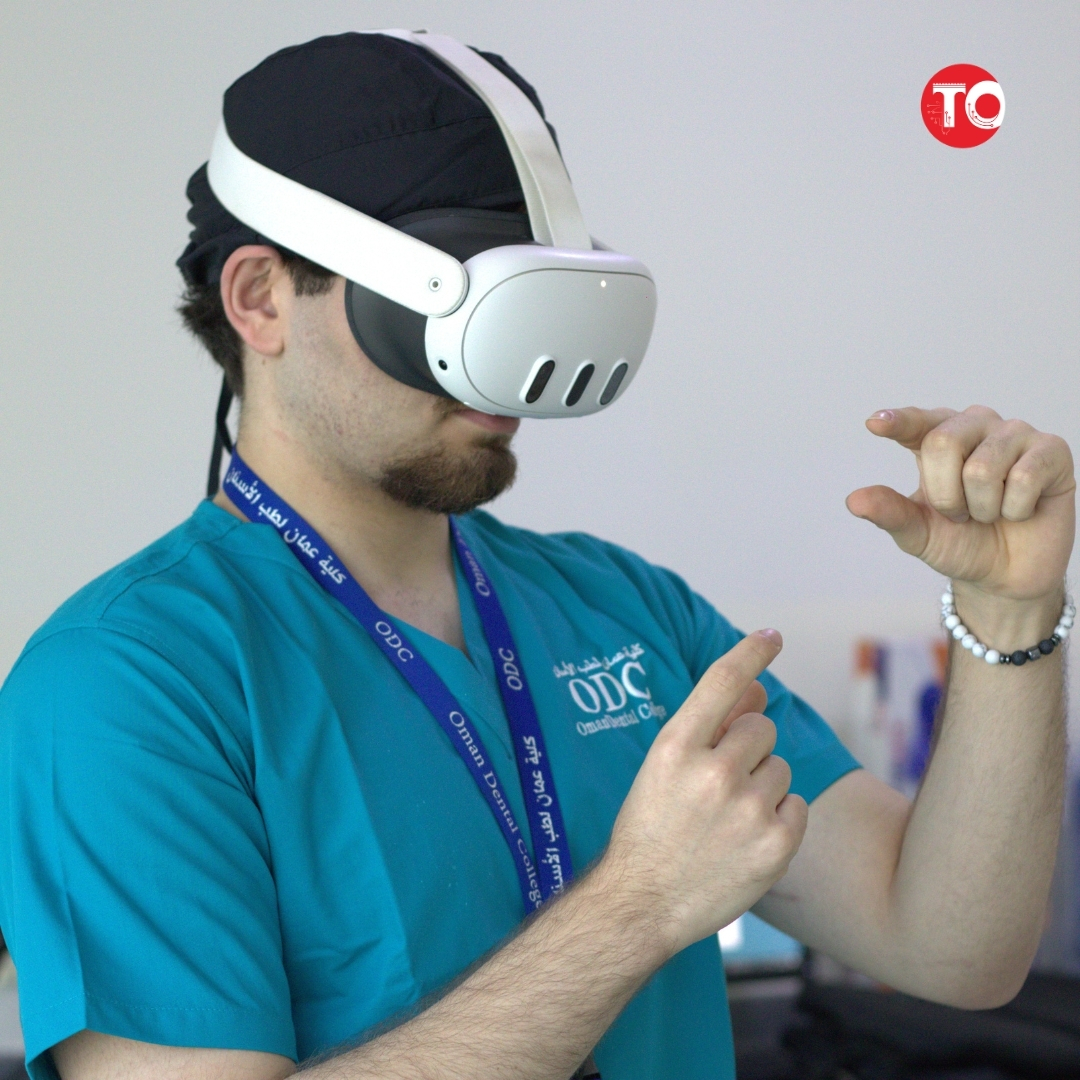
A critical aspect of educational technology adoption lies in facilitating the transition from teacher-centred instruction to learner-centred education. This transformation promotes active learning environments in which instruction can be personalised and adapted to individual learner needs, pace, and learning styles. Educational technology enables students to engage more deeply with content through interactive and experiential learning approaches. For instance, at Oman Dental College, virtual reality (VR)–based teaching methodologies incorporating gamification and simulation have been developed in-house to provide immersive learning experiences, allowing students to practice clinical decision-making within safe and controlled virtual environments.
The integration of EdTech into assessment practices further enhances learning outcomes through continuous monitoring and feedback mechanisms. Technology-enabled assessment systems support formative evaluation by providing timely, AI-assisted feedback that guides learners toward improvement rather than merely measuring performance. At Oman Dental College, a live learning analytics dashboard enables faculty members to monitor student engagement, progression, and academic performance in real time, thereby facilitating evidence-based academic interventions and data-driven decision-making.
Despite its significant advantages, institutional adoption of EdTech must be approached with careful consideration of emerging challenges and ethical implications. Issues related to the digital divide and accessibility may affect both faculty and students, potentially widening disparities in learning opportunities. Furthermore, the growing use of artificial intelligence in education raises concerns regarding academic integrity, data privacy, and responsible technology use. Excessive reliance on technological systems may also risk diminishing critical thinking, independent learning practices, and the organic progression of scholarly development if not balanced with sound pedagogical principles.
Looking ahead, higher education institutions must strategically prepare to adopt AI-driven learning ecosystems that integrate smart campus technologies, immersive learning platforms, and adaptive digital environments. When implemented thoughtfully, EdTech has the potential not only to enhance teaching and learning but also to redefine educational experiences to meet the evolving demands of future healthcare and professional education.
Dr Sivakumar Manickam
Associate Professor and Head of Educational Technology & Learning Resources
skumar@staff.odc.edu.om