




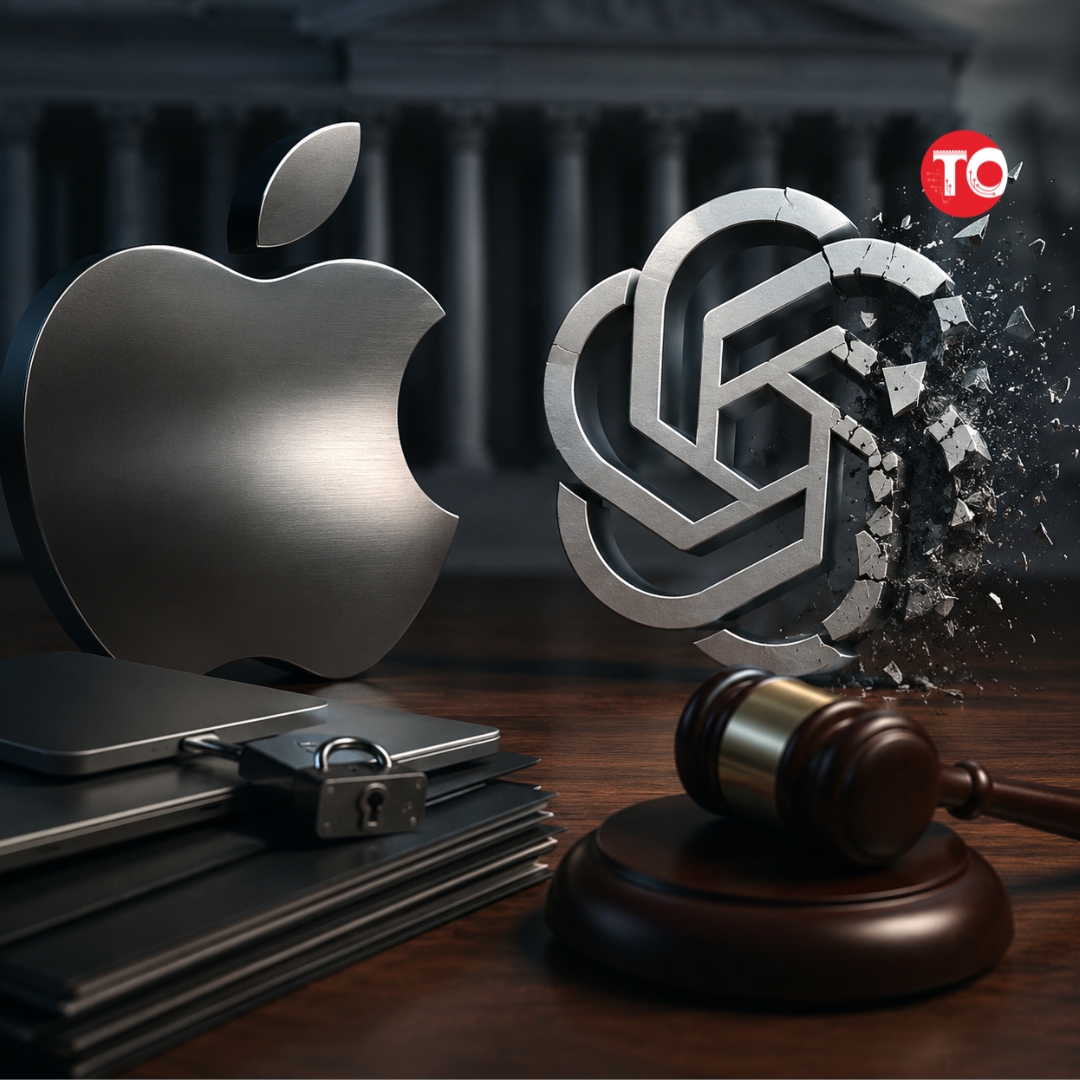
In a dramatic legal confrontation that marks the total unraveling of their former tech partnership, Apple Inc. has filed a sweeping federal lawsuit against OpenAI, its hardware subsidiary io Products, and two specific former Apple employees. The 41-page complaint, submitted to the U.S. District Court for the Northern District of California, accuses the artificial intelligence giant of orchestrating a systematic, institutional campaign to misappropriate highly sensitive hardware trade secrets. Apple alleges that the ChatGPT creator actively poached its veteran engineering talent to aggressively accelerate OpenAI's nascent consumer hardware ambitions, placing the two tech titans in direct conflict.
The litigation details a pattern of corporate espionage, explicitly naming OpenAI's Chief Hardware Officer, Tang Tan—a 24-year Apple veteran who previously oversaw iPhone and Apple Watch design—and former senior electrical engineer Chang Liu as central defendants. The filing claims that OpenAI recruiters and executives deliberately used insider knowledge of unreleased Apple products and internal codenames to extract highly classified data. Most shockingly, the lawsuit alleges that job candidates interviewing at OpenAI were explicitly instructed to bring "actual parts," prototypes, CAD files, and confidential design specifications from Apple for invasive "show and tell" sessions during the recruitment process.
Beyond interview manipulation, the lawsuit outlines severe breaches of digital security and physical theft. According to Apple, engineer Chang Liu failed to return an official company laptop upon his departure in January 2026, subsequently exploiting an authentication vulnerability in Apple’s network storage to download over a thousand pages of proprietary technical presentations and circuit board schematics while already working for OpenAI. The suit also alleges that OpenAI went so far as to mislead one of Apple's longtime manufacturing partners into performing proprietary metal-finishing techniques under the false pretense that they had Apple's formal authorization. OpenAI has firmly denied all allegations, asserting through spokespeople that the company operates with total integrity and has absolutely no commercial interest in the trade secrets of other enterprises.
This high-stakes litigation represents a staggering reversal of the collaborative alliance forged in 2024 when Apple integrated ChatGPT natively into its Apple Intelligence features. The breakdown stems from a deepening competitive overlap, as OpenAI’s multi-billion-dollar acquisition of Jony Ive's io studio signals its intent to build dedicated AI consumer devices that challenge the iPhone's market dominance. By bringing forward four distinct claims under the federal Defend Trade Secrets Act, Apple is aggressively seeking monetary damages, permanent injunctions, and the immediate return of all stolen files to ensure OpenAI cannot profit from its intellectual property.
The timing of the lawsuit introduces massive structural complications for OpenAI's long-term corporate roadmap, particularly regarding its highly anticipated initial public offering (IPO). The legal battle forces intensive discovery processes that could completely expose OpenAI's internal communications, recruitment strategies, and confidential product roadmaps to public scrutiny. With investors already scrutinizing OpenAI’s $852 billion valuation—especially as agile competitors like Anthropic continue to make massive revenue gains—a prolonged, messy trade-secret battle with the most valuable company in the world threatens to erode investor confidence and cloud the regulatory approvals necessary to debut on public markets.