



Why the relationship you build after the deal closes matters more than the deal itself
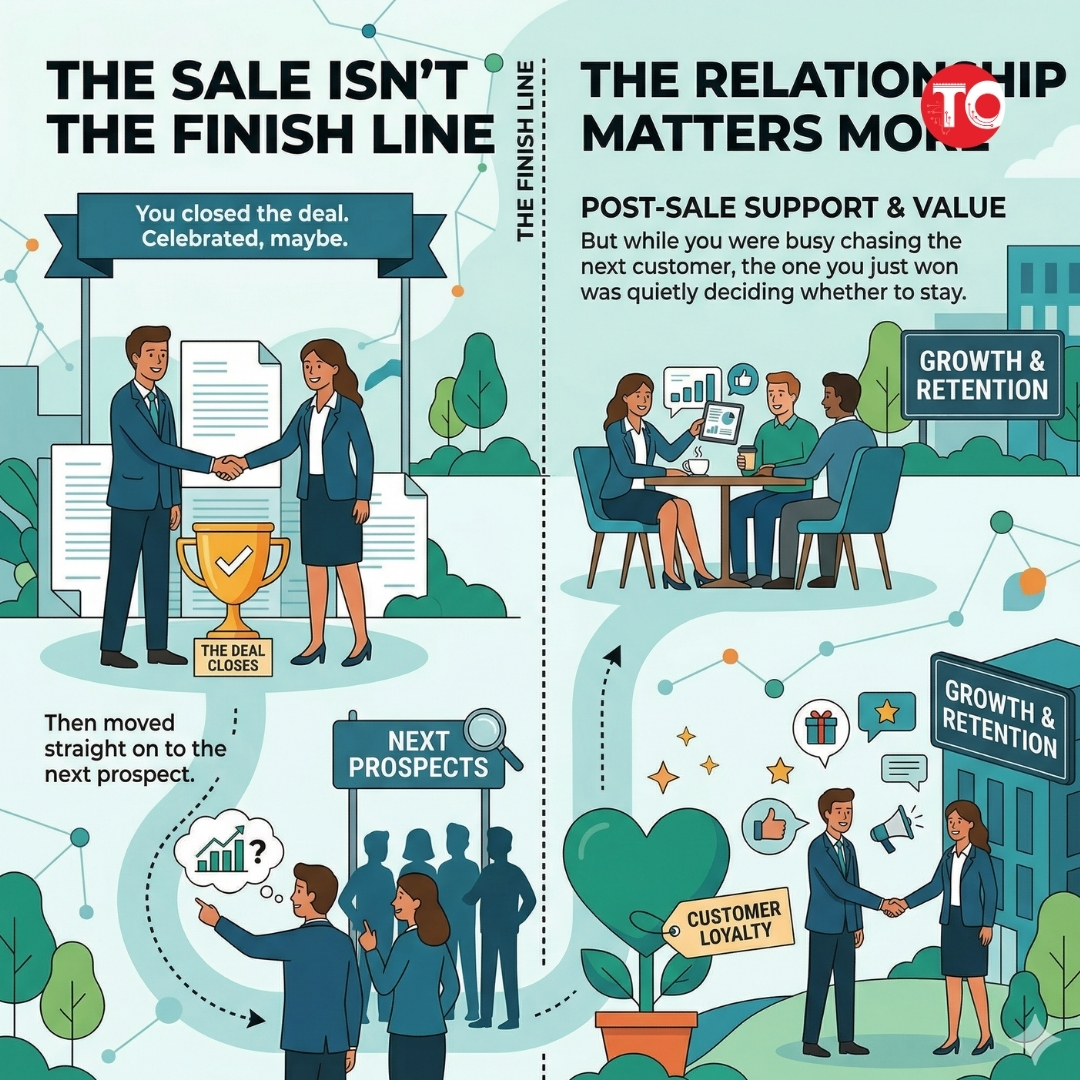
You closed the deal. Celebrated, maybe. Then moved straight on to the next prospect.
It was a genuine win. Closing matters. What happens next matters more.
But while you were busy chasing the next customer, the one you just won was quietly deciding whether to stay.
That’s where most businesses lose.
The Numbers Don’t Lie
Here’s a statistic that should change how you think about growth: you have a 60–70% chance of selling to an existing customer, but only a 5–20% chance of converting a new one. Yet most companies still pour most of their energy into acquisition.
The cost of that mistake shows up fast. A 2025 analysis by The Sales Collective found that 41% of lost accounts come down to poor follow-up. Not price. Not competition. Poor follow-up.
The sale opens the door. The relationship is what keeps it open.
What’s Really Driving Churn
When customers leave, we usually blame the product. But research tells a different story.
Only 2% of customers churn due to product fit. The real issue is understanding.
Around 38% of sales leaders say customers leave because they never fully grasped the value of what they bought. They signed up. They used the product. But they never truly got it. And when something shinier came along, they were gone.
If a customer doesn’t understand what they have, they can’t appreciate what they’d be losing.
That’s not a product problem. That’s a customer relationship problem.
Where Value Lives or Dies
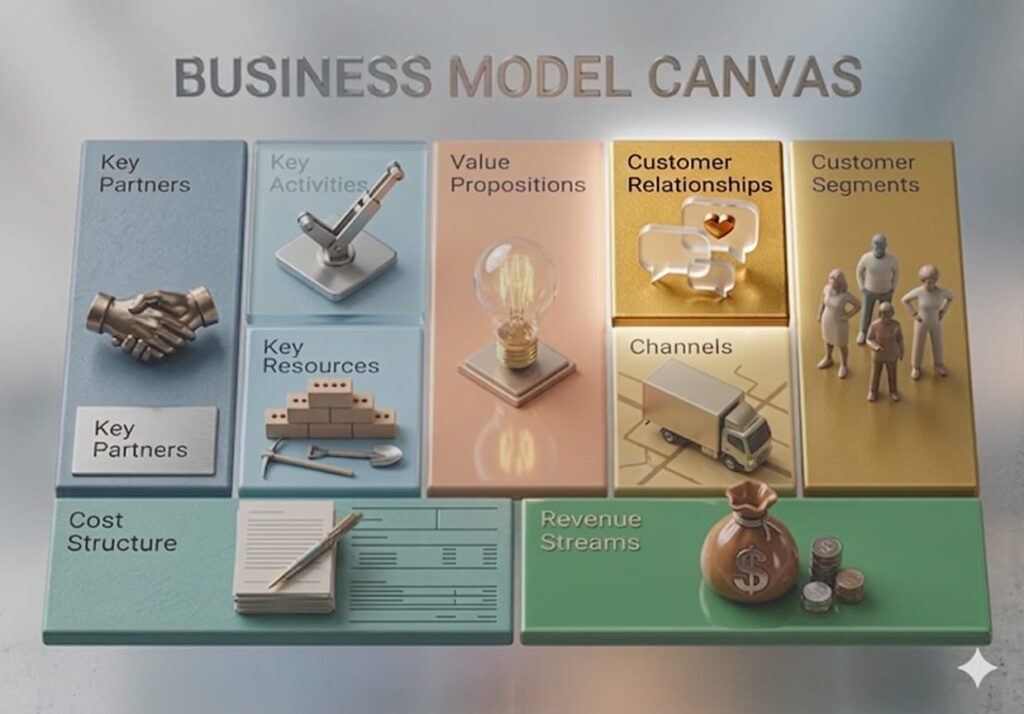
On the Business Model Canvas, Customer Relationships sit directly next to the Value Proposition, and that placement isn’t accidental. The value proposition is the promise. Customer relationships are how that promise gets reinforced, explained, and experienced over time.
When this block is weak, value doesn’t disappear overnight. It fades. And once value becomes unclear, loyalty becomes fragile.
Where Price Really Fits: A Software as a Service (SaaS) Example
This is usually where price enters the conversation. And yes, price matters in SaaS.
But price is rarely the root cause of churn. It’s where weak relationships get exposed.
In SaaS, customers don’t buy features. They buy outcomes: efficiency, clarity, reduced risk. Early on, everything looks good. The demo lands. Onboarding feels smooth. Then usage plateaus, key features go unused, and check-ins become generic or stop altogether.
The product still works, but the value is no longer obvious.
When renewal comes around, the pricing suddenly feels “high.” A competitor offering 10–20% less enters the picture. The customer doesn’t leave because the alternative is cheaper. They leave because the value stopped being reinforced.
In SaaS, price doesn’t break relationships. Silence does.
The Revenue Hiding in Plain Sight
Customers who stay 31 months or longer spend, on average, 67% more than they did in their first six months. Trust compounds and trust drives expansion.
At the same time, customer acquisition costs have risen 40% since 2023. A 5% increase in retention can lift profits by 25–95%. That’s not incremental improvement. That’s a business shift, without spending another cent on ads.
The Simple Shift
You don’t need a loyalty program on day one. You need consistency and intent.
Research shows 80% of sales require at least five follow-ups, yet most teams stop well short of that. Check in with purpose. Know your product well enough to connect it to your customer’s evolving needs. Make it clear the relationship didn’t end at the invoice.
Because the businesses growing fastest today aren’t the ones with the best acquisition funnels. They’re the ones who understand that on Business Model Canvas, Customer Relationships isn’t just a box to fill in. It’s the block that keeps every other block honest.So take a hard look at your post-sale process. Where does the relationship drop off? Where does communication go quietly? That’s where your next growth opportunity is hiding — and it’s already in your customer list.